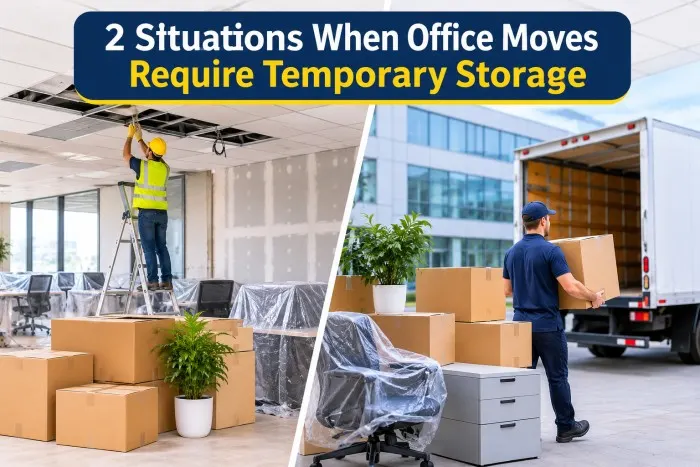
Office relocations do not always involve transferring all furniture, equipment, and documents directly from one workplace to another. Often, businesses require temporary or long-term storage to manage the transition between premises, accommodate differences in available space, and organize their assets more efficiently.
Unlike residential moves, office relocations often involve operational deadlines, multiple departments, specialized equipment, and large quantities of furniture and supplies. As a result, additional storage becomes an important part of the moving plan rather than an optional convenience. There are two situations in which businesses may particularly benefit from arranging storage alongside professional office moving services.
1. When the new office is not ready for immediate occupancy
One of the main reasons businesses require temporary storage is the delay between vacating the old premises and moving into the new workplace. For instance, a company may need to vacate its office before renovations, electrical installations, flooring replacements, or IT infrastructure setup at the new location are complete. In this situation, transporting all office assets directly to the new location may be impractical. Construction activities can expose furniture and electronic equipment to dust, moisture, and accidental damage. Furthermore, contractors may need unrestricted access to different areas of the building to complete their work.
A storage facility can provide temporary storage for desks, office chairs, filing cabinets, meeting room furniture, and other belongings. Sensitive equipment, including computers, monitors, and networking devices, may require specialized storage conditions and additional protective packaging. Professional movers https://paramountmoving.ca/victoria/service/office-movers-in-victoria/ can organize the transportation of office assets to the storage facility and arrange for their delivery once the new workplace is ready. This approach helps businesses avoid overcrowding the premises and reduces the risk of damage during renovations.
2. When the new office has less space or requires a gradual transition
Another common situation occurs when a business moves to smaller premises or changes its workplace layout. For instance, a company that transitions to a hybrid work model may no longer require individual desks and permanent workstations for each employee. However, immediately replacing or disposing of all surplus furniture may not be practical.
Additional storage enables companies to retain useful assets without cluttering the new office. Extra desks, chairs, storage cabinets, presentation equipment, and archived documents can be stored until the business determines if they are needed elsewhere or can be redistributed. Storage can also support companies that are expanding into new premises gradually. Different departments may relocate at different times while their furniture and equipment remain in storage until their work areas are ready.
In both cases, businesses should consider accessibility, security, insurance coverage, and environmental conditions of the storage space. Electronic equipment, paper records, and wooden furniture may require different storage arrangements. Maintaining a detailed inventory is also important so items can be located and delivered when needed.