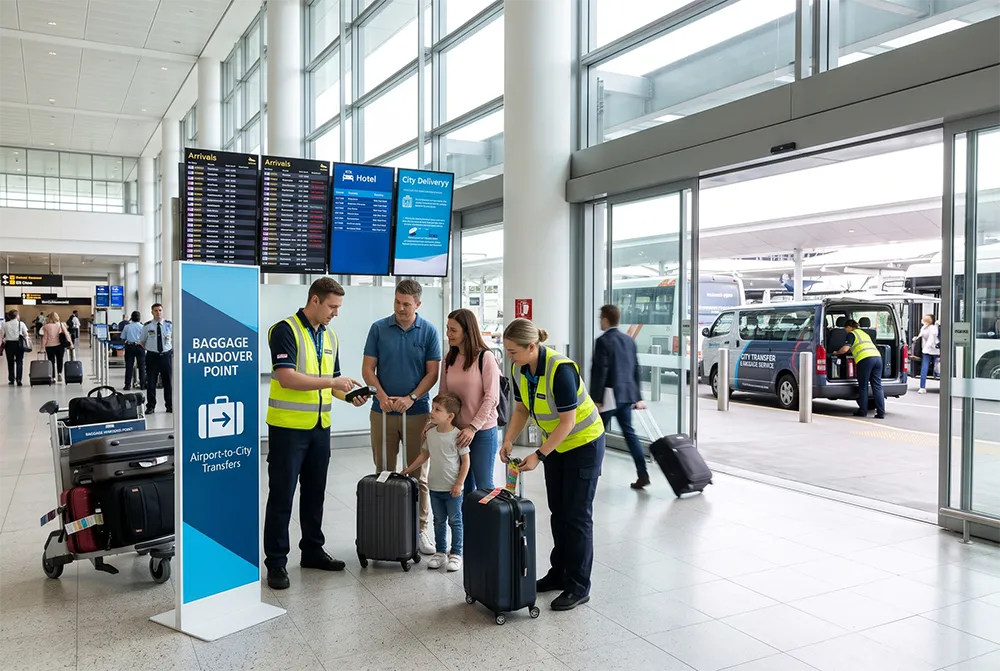
The flight is only one part of a passenger’s baggage journey. A suitcase may move from an aircraft cabin to a taxi boot, a coach luggage bay and a station platform before it reaches the hotel. Every handover creates a small coordination task: which bag moves first, who is carrying it and which items must remain accessible?
Planning those transitions begins before departure. A tool such as CarrySizer can help travellers compare a packed bag with published airline allowances. The booking and operating carrier still need checking. Once the flight requirements are clear, the same bag should be assessed for the ground journey rather than treated as an airport-only decision.
Map the actual handling points
Write down the transfers between the arrival terminal and the final door. Include the walk to the pickup area, any vehicle change and the distance from the last stop to the accommodation. A route described as one transfer may still involve steps, narrow doors or a walk across an uneven pavement.
For a pre-booked vehicle, describe the luggage accurately. The number of passengers alone does not tell an operator how much usable luggage space is required. Give the number and approximate size of the bags, and mention unusual shapes. Ask the provider to confirm the vehicle’s suitability rather than assuming that a passenger seat count guarantees space for every suitcase.
Keep the access pouch out of the loading sequence
A passenger may need a phone, ticket, identification or accommodation details immediately after the larger bags have been loaded. Put those items in a compact pouch that remains with the passenger wherever the service’s rules allow.
Separate what must stay close from what is merely convenient. A snack for the ride is useful; a travel document buried at the bottom of a luggage bay is a preventable problem. Before any bag is placed in a vehicle compartment or handed over for carriage, check the operator’s rules for valuables and restricted items.
Agree the bag count before loading
Count the pieces at the collection point and again at the destination. Include small items that are easy to leave behind, such as a laptop sleeve, a folded stroller or a jacket placed on top of a case. Where practical, let one person keep track of the total while another handles tickets or speaks to the driver.
This does not require a complicated checklist. A short note reading “two cases, one backpack and one folded item” is easier to use than relying on memory after an overnight flight. At a shared stop, identify your own pieces before removing them and avoid blocking other passengers while reorganising the contents.
Choose access over improvised repacking
A bag’s internal layout affects how a handover goes. Tickets in a top pocket and a separate pouch for the next stage reduce the need to open the main compartment beside a vehicle. A handle that can be gripped easily matters more at that moment than an extra external pocket stuffed beyond its intended shape.
Check straps and loose accessories before loading. Keep shoulder straps secured so they do not trail, and follow staff instructions about positioning bags. Leave enough control of your luggage to move through a door or lift without dragging another passenger’s belongings along with it.
Make a different plan for the final walk
The final stage is often the least considered. Ask where the vehicle can actually stop, whether there are stairs and whether luggage storage is available if you arrive before check-in. These answers may change the most practical bag style or the pickup arrangement.
A rolling case can be comfortable through a terminal but awkward over repeated steps. A backpack frees a hand but becomes tiring if overloaded. Judge the complete route and your own ability to handle the bag, rather than treating either design as universally better.
Clear baggage information helps both travellers and transport providers. Passengers can prepare the right items and operators can plan suitable space. A predictable bag count, accessible journey essentials and an agreed unloading point turn the airport-to-city transfer into a sequence that is easier to manage.