




Safety is always the top priority when travelling with young children, especially in a city like Boston, where the roads can be busy and crowded. For parents and caregivers, understanding the child seat laws in Massachusetts is crucial to ensuring the safety of their little ones while on the road.
Whether you are a resident or visiting Boston, knowing the specifics of child passenger safety laws will help keep your child safe and prevent legal trouble. In this article, we’ll cover everything you need to know about child seat rules in Boston, MA, including the legal requirements, types of car seats, and other important safety tips.
Massachusetts Child Seat Law Overview
In Massachusetts, the law is clear when it comes to the use of child safety seats. The state’s child passenger safety law requires that all children under the age of 8 must be in an appropriate child safety seat, which may be either a rear-facing seat, a forward-facing seat, or a booster seat, depending on their size, age, and weight. These laws are in place to reduce the risk of injury or death in the event of a car accident.
The key points of Massachusetts child seat laws are as follows:
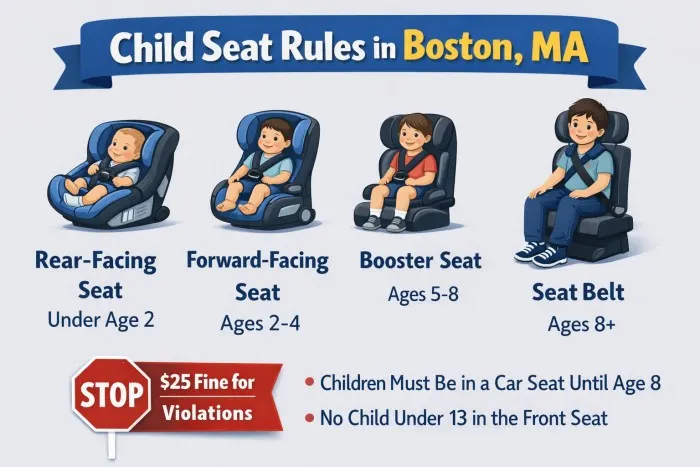
- Children under the age of 2 must be in a rear-facing car seat.
- Children between the ages of 2 and 8 (or until they weigh 40 pounds or more) must be in a forward-facing car seat with a harness system or a booster seat.
- Children between the ages of 8 and 12 must use a booster seat until they are tall enough to properly fit a seat belt (usually when they are at least 4 feet 9 inches tall).
- All children under the age of 13 must ride in the back seat, as it is considered safer than the front seat.
These rules are strictly enforced, and failure to comply can result in fines and penalties, so parents need to follow them closely.
Types of Child Car Seats
Understanding the different types of car seats available can help parents choose the best one for their child. The law requires that the car seat used should be appropriate for the child’s age, weight, and height. Here’s a breakdown of the different types of car seats and the appropriate stages for each:
1. Rear-Facing Car Seats
Rear-facing car seats are recommended for infants and toddlers up to the age of 2. This position provides the best protection for a child’s head, neck, and spine in the event of a crash. According to Massachusetts law, children under 2 must be placed in a rear-facing seat, and many experts suggest keeping children in a rear-facing position until they reach the maximum weight and height limits set by the car seat manufacturer, which may be up to 40 pounds or more.
2. Forward-Facing Car Seats
Once your child exceeds the weight and height limits for a rear-facing seat (usually after the age of 2), they should transition to a forward-facing car seat. This seat should be equipped with a harness system that helps secure the child safely in the event of a crash. Massachusetts law mandates that children up to 8 years old, or those weighing less than 40 pounds, must use a forward-facing car seat. Some seats can be converted from rear-facing to forward-facing, making them a great long-term option.
3. Booster Seats
Once children outgrow their forward-facing car seats, they are ready for booster seats. These seats raise the child so that the car’s seat belt fits correctly, typically across the child’s chest and lap. In Massachusetts, children must continue using a booster seat until they are at least 8 years old, or until they reach a height of 4 feet 9 inches. A booster seat ensures that the seat belt is positioned properly, minimizing the risk of injury in the event of an accident.
4. Seat Belts
Once children are tall enough to sit properly with the seat belt fitting across their chest and lap (usually around the age of 12), they can transition to using a regular seat belt without the aid of a booster. In Massachusetts, children under the age of 13 are required to sit in the back seat for safety reasons.

Key Safety Tips for Child Passengers in Boston
In addition to understanding the legal requirements for child seats, parents should also be aware of key safety tips that can help prevent accidents and ensure the safety of their child passengers.
1. Proper Installation of Car Seats
One of the most important steps in ensuring your child’s safety is correctly installing the car seat. In Massachusetts, a significant number of car seats are installed incorrectly, which can increase the risk of injury. Always follow the manufacturer’s instructions for installation, and if you’re unsure, consider getting a certified child passenger safety technician to inspect the installation. Many hospitals, fire stations, and police stations in Boston offer free car seat inspection services.
2. Never Use a Secondhand Car Seat
It might be tempting to save money by using a secondhand car seat, but it is strongly discouraged. Car seats have expiration dates, and a secondhand seat may not be safe if it has been in a previous accident. Always buy a new car seat that is appropriate for your child’s size, age, and weight, and ensure it hasn’t been recalled.
3. Avoid Using a Seat Belt Alone for Young Children
Although the seat belt is a vital safety feature, it is not designed for young children. A child who is not yet tall enough or mature enough to sit properly with a seat belt can experience serious injury in an accident. Always use the appropriate car seat or booster seat until your child is large enough to safely use a seat belt.
4. Make Sure the Harness Is Properly Secured
The harness system in a car seat should be snug, with no more than one finger’s width of space between the harness and your child’s chest. The straps should be positioned at or below the child’s shoulders for rear-facing seats, and at or above the shoulders for forward-facing seats. A loose harness reduces the effectiveness of the car seat in protecting your child during a crash.
5. Consider the Back Seat First
The back seat is always the safest place for children to ride, especially if they are under 13 years old. This is because the force of airbags can be dangerous to young children sitting in the front seat. Always install the car seat in the back seat, away from any airbags.
Fines and Penalties for Non-Compliance
Failure to comply with Massachusetts’ child seat laws can result in fines. The penalties for not properly securing a child in a car seat can range from $25 to $100, and the offense can be considered a moving violation, which could affect the driver’s insurance rates. It’s important to take these laws seriously and ensure that your child is always properly secured before getting on the road.
Conclusion
Understanding the child seat rules in Boston, MA, is essential for keeping your little ones safe while traveling. By following the law and using the correct car seat for your child’s age, weight, and height, you can significantly reduce the risk of injury in the event of an accident.
Remember to regularly check the installation of your child’s car seat, avoid secondhand seats, and always prioritize the back seat for children under 13. By taking these precautions, you are ensuring a safer ride for both you and your child on the busy roads of Boston.