



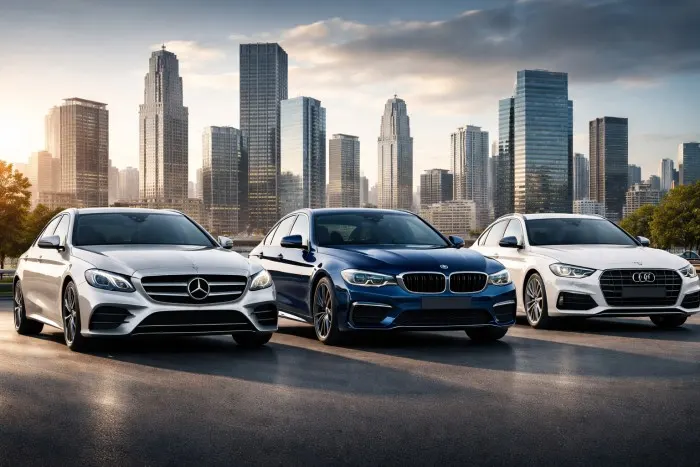
In a move that could mark a turning point for India’s automotive sector, the country is preparing to significantly lower import duties on cars from the European Union under a forthcoming Free Trade Agreement (FTA). A Reuters report indicates that tariffs on European vehicles may be reduced to 40% from the current 70–110%, with a phased roadmap to bring them down further to as low as 10% over time. Described as the “mother of all deals,” the long-awaited agreement between India and the 27-nation EU bloc could be formally announced as early as this week, following years of negotiations.
Limited Quota, Phased Liberalisation
Sources familiar with the talks say the initial duty reduction will apply to a capped volume of around 200,000 vehicles annually, all priced above €15,000 (approximately ₹15.5 lakh). This quota-based system is intended to prevent a sudden surge in imports while still offering European manufacturers meaningfully improved access to the Indian market. Over time, import duties are expected to be cut further to 10%, representing the most aggressive tariff liberalisation India has ever undertaken in the passenger vehicle segment.
Luxury Car Sales – Global (CY 2025)
| Brand | Sales (Units) | Growth % YoY |
|---|---|---|
| BMW | 2,169,761 | -1.40% |
| Mercedes-Benz | 1,800,800 | -9.00% |
| Audi | 1,623,551 | -2.90% |
| Total | 5,594,112 |
Luxury Car Sales – India (CY 2025)
| Brand | Sales (Units) | Growth % YoY |
|---|---|---|
| Mercedes-Benz | 19,007 | -2.85% |
| BMW | 17,271 | 15.05% |
| Audi | 4,510 | -22.46% |
| Total | 40,788 |
EVs Excluded to Protect Domestic Investments
Battery electric vehicles (EVs) will remain outside the scope of these duty cuts for the first five years. The exclusion is aimed at safeguarding India’s rapidly expanding EV ecosystem, particularly investments made by domestic manufacturers such as Tata Motors and Mahindra. After the initial five-year protection period, EVs are expected to follow a similar phased tariff-reduction path.
Major Boost for European Automakers
The proposed changes are expected to significantly benefit European carmakers including Volkswagen, Mercedes-Benz, BMW, Renault, and Stellantis. While several of these brands already manufacture vehicles locally, high import duties have long constrained their ability to introduce premium and niche models. Lower tariffs would allow more competitive pricing of imported vehicles, wider product portfolios, and the opportunity to test market demand before committing to deeper localisation and new investments.
Strategic Shift for India’s Auto Sector
Despite being the world’s third-largest car market, with annual sales of about 4.4 million vehicles, India remains one of the most protected automotive markets globally. Imported cars attract some of the highest duties in the world—a policy that has repeatedly drawn criticism from international auto executives, including Tesla CEO Elon Musk. The proposed India–EU trade pact signals a strategic shift that could gradually open up the sector while balancing domestic industry interests.