

Despite recent diplomatic efforts that had raised hopes for a lasting peace in the Middle East, tensions between the United States and Iran have escalated once again, creating fresh uncertainty for travellers across the region. US President Donald Trump declared that the ceasefire was “over” following a new wave of hostilities, signalling a renewed deterioration in regional security.
Speaking on 8 July while arriving in Turkey for the NATO summit, Trump said the ceasefire had effectively collapsed, although he noted that negotiations between both sides could still continue. His comments came after a series of attacks on commercial shipping in the Strait of Hormuz. While Iran has not officially claimed responsibility for the incidents, the United States responded with strikes targeting more than 80 locations inside Iran.
The conflict has also spread beyond the two nations. Kuwait reported intercepting two ballistic missiles and 13 drones after experiencing repeated attacks since a temporary ceasefire was reached in April. The latest escalation represents the most significant setback since the Memorandum of Understanding aimed at ending the conflict was signed on 17 June.
How the Renewed Conflict Is Affecting Air Travel
The renewed hostilities come after months of disruption to air travel across the Middle East. Since the conflict began, airlines have faced repeated airspace closures, flight cancellations, route diversions, and schedule changes. Although diplomatic talks had briefly eased tensions, intermittent missile activity during May and June—particularly around Bahrain and Kuwait—continued to affect regional aviation. As a result, travellers flying to, from, or through the Middle East should remain alert, as flight operations may change with little warning.
The timing is particularly challenging as it coincides with one of the busiest travel periods of the year. Thousands of residents and visitors are leaving Gulf countries for summer holidays to escape soaring temperatures, leading to a sharp increase in passenger traffic at major airports such as Dubai International Airport. Airport authorities are advising travellers to arrive well ahead of their scheduled departure times to avoid delays caused by peak-season crowds.
Airlines are also urging passengers to plan carefully. Most carriers recommend arriving at the airport at least three hours before departure, completing security and immigration procedures well in advance, and reaching the boarding gate at least one hour before takeoff. With several international airlines continuing to operate reduced services or temporarily suspending routes across parts of the Middle East, regional carriers are expected to experience higher passenger demand on flights connecting Europe, North America, and Asia.
While diplomatic efforts have helped reduce the intensity of the conflict in recent weeks, the security situation remains highly fluid. Airspace restrictions, flight rerouting, schedule adjustments, and last-minute cancellations remain possible. Travellers are advised to monitor airline updates regularly, stay informed about the latest travel advisories, and allow extra flexibility in their travel plans to minimise the impact of any unexpected disruptions.
Airlines Operating Across the Middle East
Several major airlines have restored a significant portion of their networks, although some continue to operate reduced schedules or modified routes due to ongoing security considerations.
- Emirates has resumed flights to more than 130 destinations worldwide and advises passengers to check their flight status before departure. The airline also offers flexible booking options and travel protection for eligible customers.
- Etihad Airways is operating flights to around 80 destinations, with additional seasonal routes expected to return as conditions improve. Eligible passengers can also benefit from flexible ticket changes and complimentary travel medical insurance.
- Qatar Airways has restored services to more than 160 destinations, including multiple daily flights across the Gulf, Europe, North America, and Asia, while continuing to provide flexible rebooking options.
Other airlines that have restored much of their operations include Flydubai, Gulf Air, Air Arabia, Air India, Air India Express, IndiGo, Jazeera Airways, Flynas, Oman Air, Iraqi Airways, Kuwait Airways, and Turkish Airlines. However, some routes continue to operate with reduced frequencies or longer flight times due to airspace diversions.
Airlines That Have Suspended or Reduced Flights
Several international airlines continue to suspend or limit services across parts of the Middle East because of operational and security concerns.
These include:
- Air Canada
- airBaltic
- Air France
- British Airways
- Cathay Pacific
- KLM
- Japan Airlines
- Lufthansa
- Norwegian
- Pegasus Airlines
- Virgin Atlantic
- Singapore Airlines
- Wizz Air
Some carriers have announced provisional restart dates, while others continue to review their operations based on the evolving regional security situation. Passengers should always confirm the latest flight information directly with their airline before travelling.
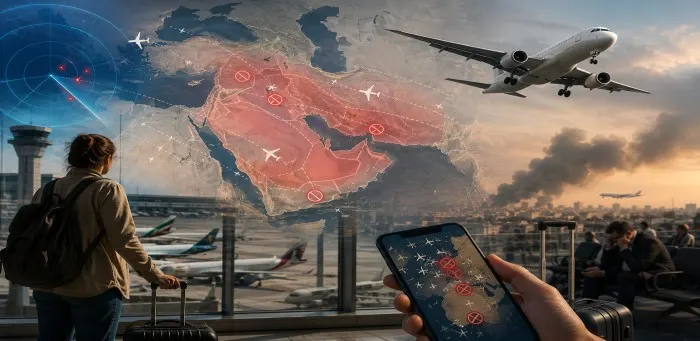
Latest Middle East Airspace Status
Although airspace restrictions have eased across much of the region, aviation authorities continue to monitor developments closely.
- Kuwait has reopened its airspace following a temporary precautionary closure.
- Bahrain is operating normal commercial flight schedules.
- The United Arab Emirates has fully restored air traffic after completing comprehensive safety assessments.
- Qatar has reopened its airspace, with airlines gradually restoring regular operations.
- Iraq and Israel have reopened their airspace following recent ceasefire developments.
- Iran has partially reopened its airspace, allowing transit through designated eastern corridors.
- Saudi Arabia has kept its airspace open but continues to advise passengers to check airline updates, as delays and schedule adjustments remain possible.
Although most regional airspace is accessible again, airlines may continue rerouting flights to avoid higher-risk areas.
What Aviation Authorities Are Advising
International aviation regulators continue to urge airlines to exercise caution while operating in and around the Middle East.
The European Union Aviation Safety Agency (EASA) recommends that airlines avoid flying over Iran, Iraq, and Lebanon, while carefully assessing risks before operating through the airspace of Bahrain, Kuwait, Israel, Jordan, Qatar, Oman, Saudi Arabia, and the United Arab Emirates. Airlines are expected to continuously monitor security developments and modify flight paths whenever necessary to ensure passenger safety.
What Travellers Should Expect
Although commercial flights continue to operate, passengers should prepare for possible disruptions.
- Longer Flight Times: Many airlines are avoiding restricted airspace, resulting in longer routes and increased travel times.
- Technical Fuel Stops: Some long-haul and low-cost flights may require unscheduled refuelling stops before reaching their final destination.
- Flight Cancellations: Airlines may cancel flights if security conditions worsen or airspace restrictions are reintroduced.
- Schedule Changes: Even after services resume, airlines may require time to restore normal operations, leading to revised departure times and missed connections.
- Flexible Booking Options: Many airlines are offering refunds, travel vouchers, or complimentary rebooking options for affected passengers, although eligibility varies by carrier.
Travel Tips Before Flying
If you’re travelling to, from, or through the Middle East, keep these recommendations in mind:
- Check your flight status before leaving for the airport.
- Arrive at least three hours before departure.
- Monitor airline emails, mobile apps, and airport announcements for updates.
- Be prepared for longer flight times due to rerouted airspace.
- Keep flexible travel plans in case of delays or last-minute schedule changes.
- Review your airline’s refund and rebooking policy before travelling.
- Consider purchasing travel insurance that covers flight disruptions if available.
Final Thoughts
Commercial aviation across the Middle East is gradually recovering, with many airlines restoring routes and several countries reopening their airspace. However, the regional security situation remains unpredictable, and operational changes can occur with little notice. Travellers should stay informed through official airline updates, follow airport guidance, and allow extra flexibility when planning their journey to minimise the impact of any unexpected travel disruptions.