




Africa’s aviation sector continues to experience remarkable growth, with major airports serving as critical hubs for continental connectivity, international trade, and tourism. The continent’s busiest airports are not only central to regional transportation networks but also reflect the economic vitality and travel demand across Africa. This article explores the eight busiest airports in Africa based on the latest 2024 passenger traffic data, highlighting their significance and operational characteristics.
1. Cairo International Airport, Egypt
Cairo International Airport (CAI) stands as the undisputed leader in Africa’s aviation landscape, handling a staggering 28.97 million passengers in 2024. Located in Egypt’s bustling capital, this airport serves as a major gateway for both international and African travel. The significant 10.6% year-over-year growth from 2023 demonstrates Cairo’s continued dominance in continental aviation.
The airport’s strategic location at the intersection of Africa, Europe, and the Middle East positions it as a crucial hub for connecting passengers traveling across these regions. Beyond its role as a passenger hub, Cairo International plays an instrumental role in Egypt’s economy, supporting the country’s substantial tourism industry and facilitating business connections throughout the continent.
2. OR Tambo International Airport, South Africa
Johannesburg’s OR Tambo International Airport (JNB) is Africa’s second busiest airport, accommodating 18.37 million passengers in 2024. This impressive figure represents a remarkable 34.5% increase from 2023, indicating strong recovery and expansion in South Africa’s aviation sector. The airport remains the principal aviation hub for southern Africa, serving as a critical gateway to the world with direct connections to six continents.
OR Tambo’s robust growth is fueled by strong business travel demand, connectivity to South Africa’s mining sector, and the renewal of direct international services. The airport’s position as a major business travel hub solidifies its importance to the regional and continental economy.
Explore More- Top 10 Busiest Airports in the World for Long-Haul Flights – September 2025
3. Bole International Airport, Ethiopia
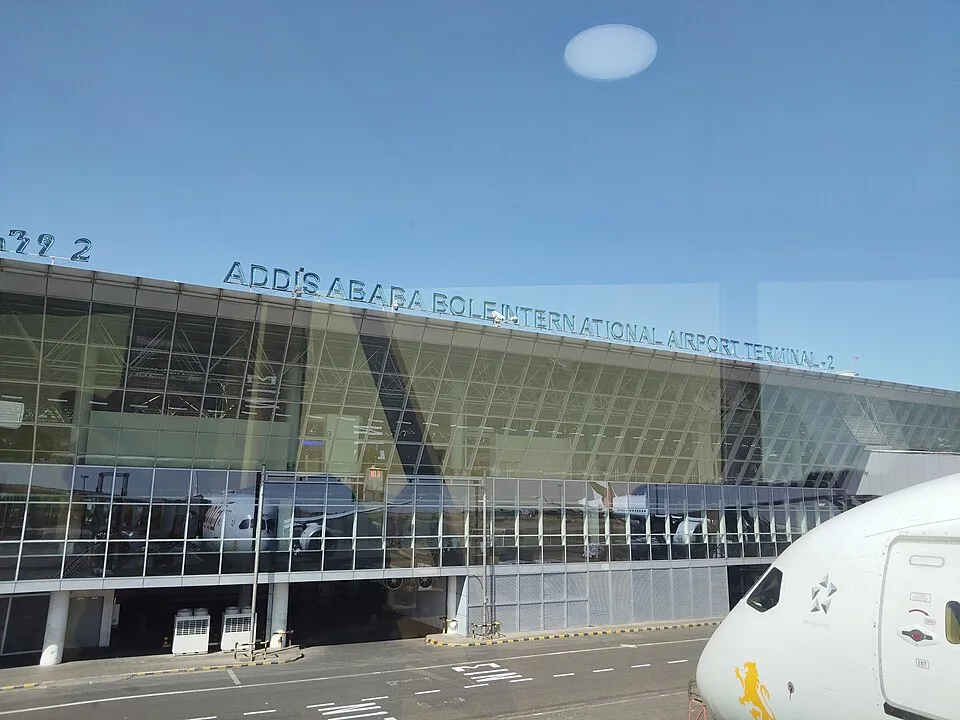
Bole International Airport (ADD) in Addis Ababa ranks as Africa’s third busiest airport, processing 11.8 million passengers in 2024. The 13.6% growth rate from the previous year reflects Ethiopia’s expanding role in continental aviation. As the headquarters of Ethiopian Airlines, one of Africa’s most significant carriers, Addis Ababa serves as a major connecting point for intra-African and international flights. The airport’s strategic location in East Africa and its integration with Ethiopian Airlines’ extensive network make it a vital hub for connecting passengers throughout the continent and beyond.
4. Mohammed V International Airport, Morocco
Casablanca’s Mohammed V International Airport (CMN) handled 10.45 million passengers in 2024, establishing it as Africa’s fourth busiest airport. The airport experienced a 6.7% increase in passenger traffic compared to 2023. This Moroccan hub has become an increasingly important gateway to North Africa and a connecting point for European-African travel. The airport’s growing importance is reflected in its expanding network of international destinations and the continued investment in terminal facilities and infrastructure upgrades.
5. Cape Town International Airport, South Africa
Cape Town International Airport (CPT) in South Africa processed 10.37 million passengers in 2024, ranking as Africa’s fifth busiest airport. The airport demonstrated strong growth with a 6.8% increase from the previous year. Cape Town’s popularity stems from its dual role as both a tourist destination and a regional business hub.
The airport connects travelers to world-famous attractions while serving the broader Western Cape region’s economic and transportation needs. Its award-winning design and functionality make it a preferred gateway for southern Africa, with the Johannesburg to Cape Town route representing one of Africa’s busiest domestic routes.
Explore More- Top 10 Busiest Airports in Europe: Ranked by Passenger Traffic

6. Hurghada International Airport, Egypt
Hurghada International Airport (HRG), located on Egypt’s Red Sea coast, handled 9.64 million passengers in 2024. This figure represents a 9.6% increase from 2023. As a primary gateway for beach tourism and resort destinations, Hurghada’s passenger traffic is predominantly leisure-oriented, reflecting the region’s appeal to international visitors seeking coastal vacations. The airport’s growth underscores the importance of tourism to Egypt’s economy and the continued popularity of Red Sea destinations among international travelers.
7. Marrakech-Menara Airport, Morocco
Marrakech-Menara Airport (RAK) in Morocco emerged as Africa’s seventh busiest airport in 2024, processing 9.25 million passengers. The airport’s exceptional 34.0% growth rate compared to 2023 highlights the dramatic surge in travel to this popular tourist destination.
Marrakech’s appeal as a cultural and tourist hub, combined with its proximity to the Atlas Mountains and Sahara Desert, drives its significant passenger volume. The airport’s robust growth trajectory suggests that Moroccan tourism continues to expand, positioning Marrakech as an increasingly important air travel hub.
Explore ore- Top 10 Busiest Airports in the Middle East
8. Houari Boumedienne Airport, Algeria
Rounding out the top eight is Houari Boumedienne Airport (ALG) in Algiers, Algeria, which processed 9.15 million passengers in 2024. The airport achieved a solid 15.0% growth rate from the previous year. As Algeria’s primary international gateway, this airport serves as a crucial connection point for North African travel and a bridge between Africa and Europe. The airport’s significant growth reflects Algeria’s expanding aviation sector and the region’s increasing integration into continental travel networks.
Conclusion
The eight busiest airports in Africa demonstrate the continent’s dynamic and rapidly growing aviation sector. These airports collectively facilitate hundreds of millions of passenger movements annually, connecting Africa’s diverse economies, cultures, and markets.
The consistent growth across these major hubs—ranging from tourism-driven increases in Egypt and Morocco to business-driven expansion in South Africa and Ethiopia—reflects Africa’s broader economic development and the increasing accessibility of air travel across the continent. As Africa continues to develop economically, these airports will play an increasingly vital role in facilitating continental connectivity, supporting tourism, and enabling business opportunities that drive the continent’s future growth.
Imag Credits- Cairo International Airport