
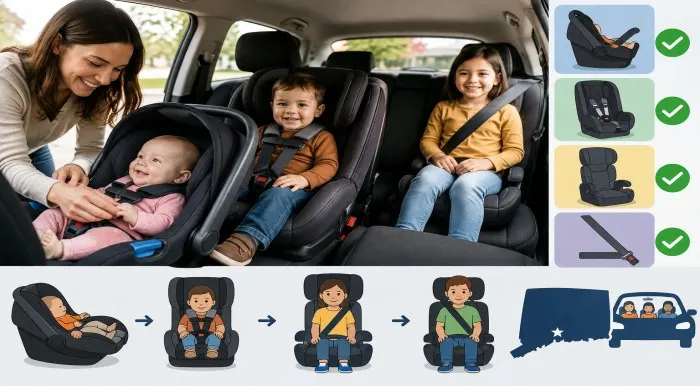
Keeping children safe inside a vehicle starts with using the correct car seat at the right age and size. In Connecticut, child passenger safety laws are designed to reduce injuries and protect infants, toddlers, and young children during crashes. However, many parents still feel confused about when to move from a rear-facing seat to a forward-facing seat, or when a booster seat is required.
This guide explains Connecticut child seat laws in detail, including age requirements, seat recommendations, penalties, and practical safety tips for families.
Why Child Seat Laws Matter
Motor vehicle accidents remain one of the leading causes of injuries for children. Properly installed child restraint systems significantly reduce the risk of serious injury or death.
According to safety experts:
- Rear-facing seats provide the best protection for infants and toddlers.
- Booster seats help position seat belts correctly on growing children.
- Adult seat belts alone are not designed for small children.
Even a short drive can become dangerous if a child is not properly restrained.
Connecticut Child Seat Laws Overview
Connecticut law requires children to use age-appropriate child restraint systems until they meet specific age and weight guidelines.
The law focuses on:
- The child’s age
- Weight
- Height
- Proper restraint type
Parents, guardians, and drivers are legally responsible for ensuring children are safely restrained.
Rear-Facing Car Seat Rules in Connecticut
Children must ride in a rear-facing car seat:
- Until at least 2 years old
- And until they reach:
- 30 pounds, or
- The maximum height/weight limit of the seat
Rear-facing seats are considered the safest option because they support the child’s:
- Head
- Neck
- Spine
This is especially important for babies and toddlers whose bones and muscles are still developing.
Types of Rear-Facing Seats
Parents can choose:
- Infant-only car seats
- Convertible car seats
- All-in-one seats
Many modern convertible seats allow rear-facing use up to 40–50 pounds, which gives extra protection beyond the legal minimum.
Forward-Facing Car Seat Rules
After outgrowing the rear-facing seat requirements, children should use a forward-facing seat with a harness.
Connecticut law generally requires:
- Children aged 2 to 5 years
- And weighing under 40 pounds to remain in an approved child restraint system.
Safety Recommendation
Experts recommend keeping children in a harnessed forward-facing seat as long as possible before switching to a booster. A 5-point harness offers better protection than a standard seat belt because it spreads crash forces across stronger parts of the body.
Booster Seat Rules in Connecticut
Children who outgrow forward-facing harness seats must use a booster seat.
Typically:
- Children ages 5 to 8
- And weighing between 40 and 60 pounds
must use a booster seat. Booster seats help ensure the seat belt fits correctly:
- Lap belt across the upper thighs
- Shoulder belt across the chest and shoulder
Without a booster, seat belts may sit dangerously on the neck or stomach.
When Can a Child Use a Regular Seat Belt?
In Connecticut, children can use a regular seat belt once they:
- Are at least 8 years old
- And weigh at least 60 pounds
However, safety experts also recommend checking whether:
- The child can sit with their back against the seat
- Knees bend naturally at the seat edge
- Shoulder belt stays properly positioned
Many children still need boosters beyond age 8 for proper seat belt fit.
Front Seat Rules for Children
Although Connecticut law may allow certain older children to sit in the front seat, safety experts strongly recommend keeping children under 13 years old in the back seat whenever possible. Front airbags can seriously injure young children during deployment. The back seat is generally the safest place for kids.
Penalties for Violating Connecticut Child Seat Laws
Drivers who fail to follow Connecticut child restraint laws may face:
- Traffic citations
- Fines
- Potential insurance consequences
More importantly, improper restraint increases the risk of severe injury during collisions. Police officers can stop a vehicle if a child restraint violation is observed.
Common Child Seat Mistakes Parents Make
Even caring parents sometimes install seats incorrectly.
1. Moving to the Next Seat Too Early
Many parents switch:
- Rear-facing → forward-facing
- Harness → booster
before the child is physically ready. Keeping children in each stage longer is usually safer.
2. Loose Harness Straps
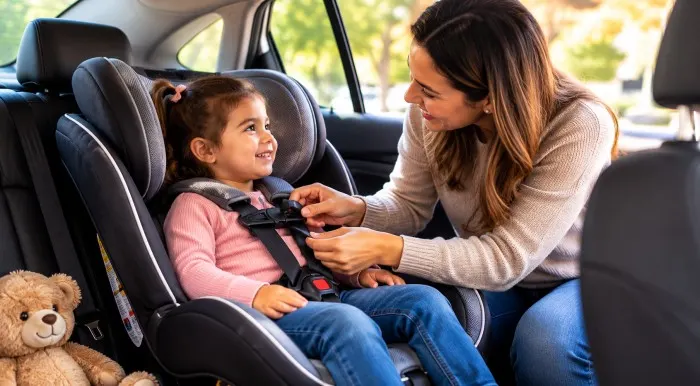
Harness straps should be snug enough that you cannot pinch excess webbing. Loose straps reduce protection during crashes.
3. Incorrect Chest Clip Position
The chest clip should sit at armpit level, not near the stomach or neck.
4. Using Expired Car Seats
Car seats have expiration dates because materials weaken over time.
Always check:
- Manufacture date
- Expiration label
- Recall notices
5. Improper Seat Belt Placement
A shoulder belt behind the back or under the arm is unsafe and illegal.
Connecticut Car Seat Installation Tips
Correct installation is just as important as choosing the right seat.
Use the LATCH System Properly
Most vehicles include:
- Lower anchors
- Top tether anchors
These help secure car seats safely.
However, check weight limits because some seats require switching to seat belt installation after a certain weight.
Read Both Manuals
Always read:
- Vehicle owner’s manual
- Car seat instruction manual
Many installation mistakes happen because parents skip one of them.
Get a Professional Inspection
Many communities in Connecticut offer:
- Free car seat inspection stations
- Certified Child Passenger Safety Technicians
These professionals can:
- Check installation
- Verify fit
- Teach proper usage
Winter Safety Tips for Connecticut Families
Cold winters in Connecticut create additional challenges.
Avoid Bulky Winter Coats
Puffy jackets create dangerous gaps between the harness and the child’s body.
Instead:
- Secure the harness first
- Place blankets or coats over the harness afterward
Watch for Frozen Buckles
- Ice and snow can affect buckle performance.
- Keep car seats clean and dry during winter months.
Taxi, Uber, and Rideshare Rules
Many parents assume rideshare vehicles are exempt from child seat laws. In reality, children should still ride in proper restraints whenever possible.
Parents using:
- Taxis
- Rideshares
- Airport transportation
should plan ahead and bring portable child restraints when needed.
School Transportation and Child Safety
Large school buses usually do not require traditional car seats because they use compartmentalized seating systems.
However:
- Small school vans
- Childcare transportation vehicles
may still require proper restraints depending on the child’s age and size. Parents should confirm safety policies with transportation providers.
Choosing the Best Car Seat for Your Child
When shopping for a car seat, consider:
Child’s:
- Age
- Height
- Weight
- Vehicle Compatibility: Not every seat fits every car properly.
- Ease of Installation: Seats with simpler installation systems are often used more correctly.
- Safety Certifications: Look for seats meeting federal safety standards.
When to Replace a Car Seat
Replace a car seat if:
- It has been involved in a moderate or severe crash
- It is expired
- Parts are missing
- The manufacturer issues a recall
Never buy a used car seat without knowing its full history.
Child Passenger Safety Recommendations Beyond the Law
Legal minimums are not always the safest option.
Safety experts recommend:
- Rear-facing as long as possible
- Harnessed seats for extended periods
- Booster seats until adult belts fit correctly
Following best practices offers more protection than simply meeting minimum legal standards.
Frequently Asked Questions
Can a 7-year-old ride without a booster in Connecticut?
Usually no, unless the child weighs at least 60 pounds and fits properly in an adult seat belt.
Can a child sit in the front seat legally?
Possibly, depending on age and circumstances, but experts recommend children under 13 remain in the back seat.
Are car seat laws different for rental cars?
No. Connecticut child restraint laws still apply in rental vehicles.
Do grandparents and relatives have to follow the same rules?
Yes. Anyone driving a child must comply with Connecticut child passenger safety laws.
Final Thoughts
Understanding Connecticut child seat rules helps parents make safer decisions every time they travel. The right car seat, correctly installed and used consistently, can dramatically reduce injury risks during accidents. While Connecticut law provides minimum legal requirements, many safety professionals encourage parents to keep children in safer restraint stages longer whenever possible. Staying informed, checking installation regularly, and following updated safety guidance can help protect children on every journey.