
DUBAI — Iran has intensified its warnings over control of the Strait of Hormuz, with military commanders and Islamic Revolutionary Guard Corps (IRGC) officials declaring that they will prevent all oil shipments from transiting the vital waterway in response to perceived threats and foreign interference.
The latest escalation revives longstanding Iranian threats to weaponize one of the world’s most critical energy chokepoints, through which approximately one-fifth of global oil and liquefied natural gas supplies were transported before disruptions tied to the broader US-Iran-Israel conflict.
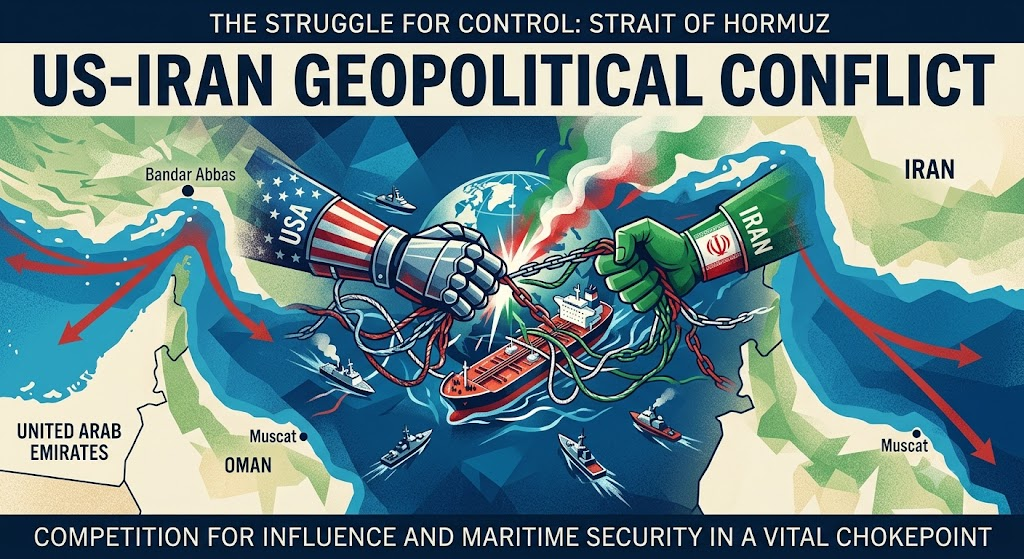
AI generated graphic for visual representation.
Direct Threats from Iranian Officials
In early March 2026, as tensions peaked following US-Israeli strikes, IRGC senior adviser Brigadier General Ebrahim Jabari issued one of the starkest warnings: “The strait is closed. If anyone tries to pass, the heroes of the Revolutionary Guards and the regular navy will set those ships ablaze… We will also attack oil pipelines and will not allow a single drop of oil to leave the region. Oil prices will reach $200 in the coming days.”
More recent statements from July 2026 echo this posture. Iran’s Khatam al-Anbiya Central Headquarters warned that any vessel failing to use Iranian-designated routes or disregarding Tehran’s navigation protocols “will be met with an immediate and forceful response from the armed forces.” The statement explicitly cautioned that US interference would trigger a “decisive and swift” reaction.
IRGC Navy spokesmen and officials, including Brigadier General Hossein Mohebbi, have reiterated that “foreigners have no place” in managing the strait and that Iran will “steadfastly maintain its sovereignty and control.”
Lawmaker and former IRGC commander Ebrahim Azizi underscored the permanence of Iran’s position: “Never. It’s our inalienable right. Iran will decide the right of passage.”
Context of Ongoing Tensions
These declarations occur against a backdrop of a fragile ceasefire between Iran and the United States, punctuated by accusations of violations from both sides. Iran has conducted drone and missile strikes on commercial vessels deviating from its approved routes, while the US has responded with targeted operations against Iranian military assets.
Tehran has established the Persian Gulf Strait Authority to regulate transportation, demanding coordination with Iranian forces and asserting the right to impose future fees or restrictions. It rejects alternative routes promoted via Omani and International Maritime Organization channels as “unacceptable and completely dangerous.”
Iran views control of the strait — which lies between its territory and Oman — as both a sovereign imperative and a powerful strategic lever. Officials argue that US and allied military presence undermines regional security, while Washington and Gulf partners insist on freedom of navigation without unilateral tolls or Iranian veto power.
Market and Regional Implications
Disruptions to Hormuz traffic have already contributed to volatility in global energy markets. Analysts warn that a sustained blockade or series of attacks could trigger sharp price spikes, supply chain chaos, and economic ripple effects far beyond the Gulf. Efforts to build bypass pipelines (e.g., UAE’s Fujairah route and Saudi Red Sea expansions) offer partial long-term hedges but cannot fully mitigate near-term risks to infrastructure and tanker traffic.
If the prediction by Iranian Brigadier General comes true all forms of Transportation will be severely affected, leading to sharp rises in food and equipment prices around the world. Our Indian correspondents have confirmed the fact that the price tags on restaurant food has already gone up by 30%.
Gulf Arab states, major Asian importers such as China and India, and international shipping firms remain on high alert. Diplomatic efforts, including Qatari-mediated talks, continue, but mutual distrust and hardline positions on both sides complicate prospects for a durable resolution.
As one regional expert noted, the strait has become Iran’s “golden weapon” — more immediate and potent in current negotiations than its nuclear program. Whether this brinkmanship leads to de-escalation or renewed confrontation will likely shape energy markets and Gulf security for months to come.
This article draws on statements from Iranian state media, IRGC releases, and international reporting. The situation remains fluid, with potential for rapid developments.