
They may be flying the smallest aircraft in Exercise Pitch Black 2026, but the crews of the Papua New Guinea Defence Force (PNGDF) Air Transport Wing (ATW) must surely have the largest hearts — and, in the context of modern air power, some of the most strategically relevant missions.
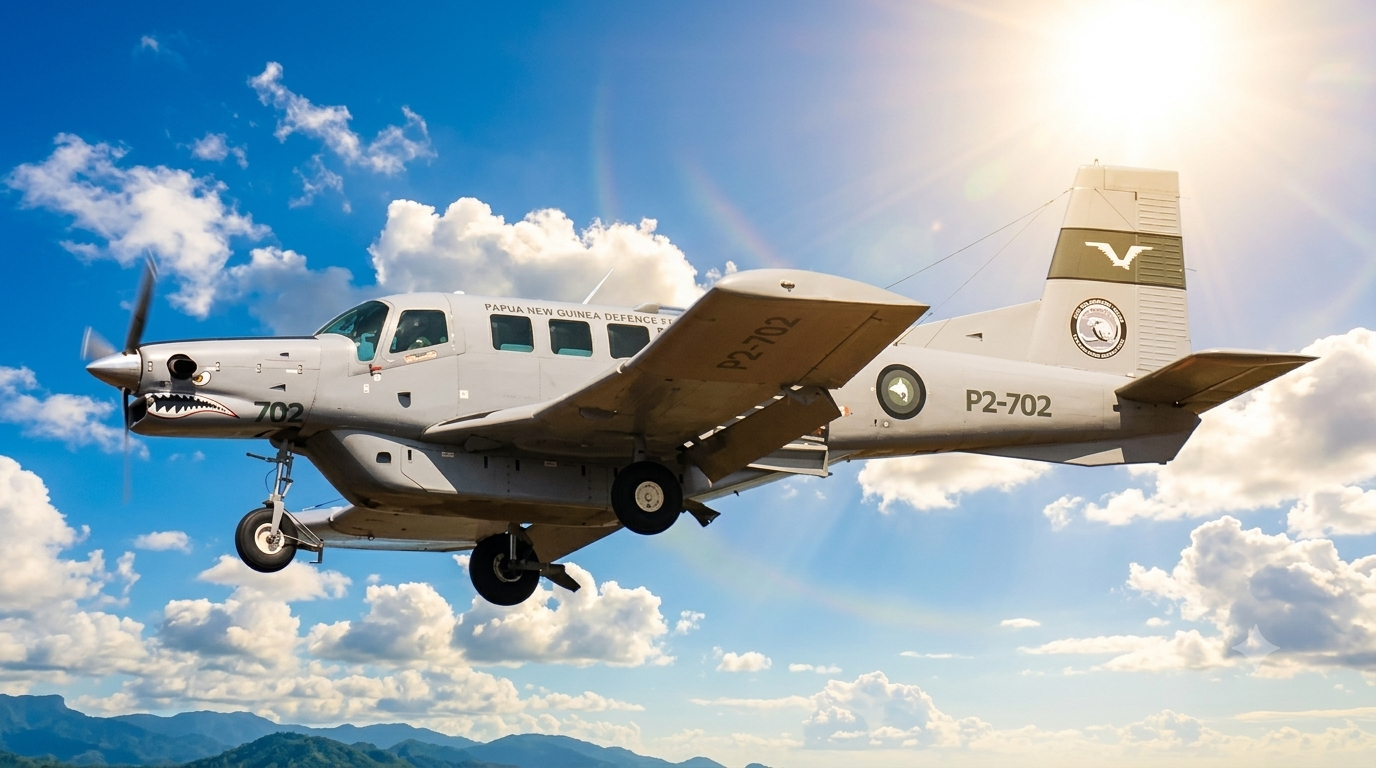
Flying just two Pacific Aerospace PAC750XL light turboprop transports amid nearly 100 fast jets, the PNGDF contingent has participated in both Blue Air (friendly) and Red Air (adversary) roles while sustaining a regular shuttle service between RAAF Darwin and Tindal. In one illustrative Red Air scenario, a PAC750XL could covertly insert a small Special Forces team into the Bradshaw Field Training Area without being engaged by defending fighters — a mission profile that underscores the enduring value of low-observable, short-takeoff-and-landing (STOL) light aircraft in contested or austere environments.
Formed in 1975, the Air Transport Wing marked its 50th anniversary last year and is pursuing ambitious growth in both personnel and platforms. This includes the planned return to service of at least one previously inactive Airbus CN235 after overhaul in Indonesia. While the ATW made its Pitch Black debut in 2024, the 2026 iteration features a larger footprint and expanded operational roles.
“We’re excited to be part of this exercise,” PAC750XL pilot Lieutenant Heydan Chan observed. “We are different from all the fighters out there with a transport aircraft capable of short take-off and landing. We actually had the opportunity to take part with the fighters in the exercise itself. It’s fun; flying here in Australia is different from flying back home.”
The contingent — pilots, maintainers, support staff, cooks and Military Police — deployed and will return with assistance from RAAF No. 35 Squadron C-27J Spartans. Chan highlighted practical gains in mission planning, timing discipline (including Times on Target) and operating in complex, dense airspace far more demanding than PNG’s domestic environment. These lessons will feed directly into PNG’s own future exercises.
A bilateral training arrangement with Australia is already building capacity: eight PNGDF pilots are currently training in Townsville, beginning on Cessna 172s at the National Aviation Academy before type-rating on the PAC750XL at home. As aircrew numbers rise, platform numbers are expected to follow.
Why Light Transports Matter in High-End Air Exercises
Light transports like the PAC750XL retain real value even among nearly 100 fast jets in exercises such as Pitch Black.
They offer STOL performance, low signatures and the ability to insert small teams or deliver logistics into austere or semi-denied areas — roles high-end fighters and heavy airlifters struggle to fill. In Red Air scenarios they force Blue forces to account for a different kind of threat.
For smaller air arms they deliver high training return: exposure to complex planning, timing and coalition C2 accelerates professionalisation at low cost. They also give nations a practical, affordable capability that supports both domestic tasks and niche contributions to larger coalitions.
In short, modern air power needs more than advanced fighters. Quiet, flexible light transports remain essential force multipliers.