
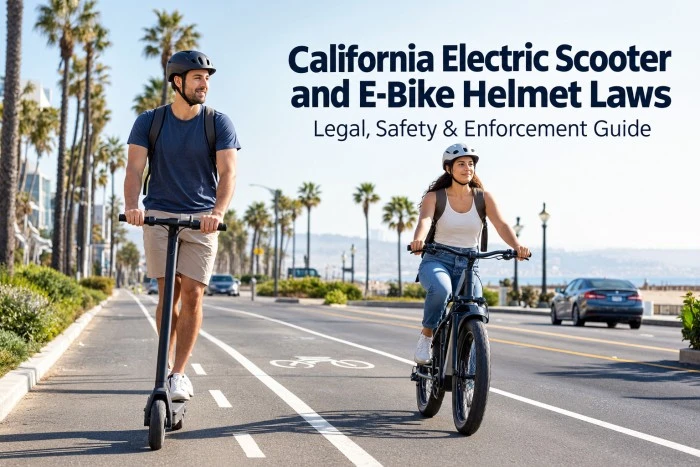
The expansion of urban micromobility across the Golden State – from the beachside paths of San Diego to the bustling tech corridors of San Francisco – has transformed how millions commute. Electric scooters and e-bikes offer sustainable, flexible, and efficient alternatives to traditional motor vehicles. However, this growth has also triggered heightened legislative focus. Understanding state statutes, safety equipment standards, helmet requirements, and local municipal bylaws is essential for riders aiming to avoid costly penalties and stay safe.
The E-Bike Regulatory Framework: Classes and Standards
California groups low-speed electric bicycles under a clear three-tier classification system set by the California Department of Motor Vehicles (DMV), which directly dictates operational limits and safety requirements:
- Class 1 (Pedal-Assist up to 20 mph): Equipped with a motor that provides assistance only when the rider is pedaling, stopping power support at 20 mph.
- Class 2 (Throttle-Assisted up to 20 mph): Equipped with a motor that can propel the bike without pedaling (throttle-actuated), capped at a maximum speed of 20 mph.
- Class 3 (Pedal-Assist up to 28 mph): Equipped with a speedometer and a motor that provides assistance up to 28 mph while pedaling. Operators must be at least 16 years old.
E-Bike Helmet Mandates by Age and Classification
Helmet requirements in California depend strictly on the vehicle’s class and the age of the operator:
Class 1 and Class 2 E-Bikes:
- Riders Under 18 Years of Age: Mandatory. Youth riders must wear a properly fitted and fastened bicycle helmet that complies with safety certifications set by the U.S. Consumer Product Safety Commission (CPSC) or ASTM.
- Riders 18 and Older: State law does not legally mandate adult riders of Class 1 or Class 2 e-bikes to wear a helmet, though safety organizations and municipal resources strongly advocate for voluntary use to prevent traumatic brain injuries.
Class 3 E-Bikes:
- Universal Mandate: A helmet is mandatory for all operators and passengers regardless of age. Because Class 3 e-bikes achieve higher speeds (up to 28 mph), safety standards are stringently enforced across all public roadways and bike paths.
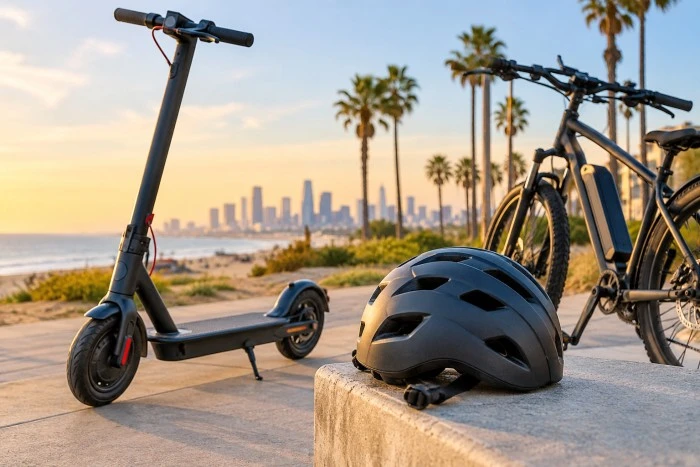
Electric Scooter (E-Scooter) Regulations and Helmets
Electric scooters (legally classified as motorized scooters) are governed by distinct statutes separate from standard bicycles. Because of smaller wheel structures and vulnerability to uneven pavement, enforcement frameworks are precise:
- Helmet Mandates: Anyone under 18 years old operating an electric scooter must wear a properly fitted and fastened bicycle helmet meeting CPSC or ASTM criteria. Adults (18 and older) are not legally required to wear a helmet, though it remains heavily recommended.
- Operational and Licensing Parameters: Riders must possess a valid driver’s license or learner’s permit to operate an e-scooter on public roadways, a guideline further detailed by the California Legislative Information Official Code Repository. The maximum state speed limit for e-scooters is capped strictly at 15 mph, and riding them on standard sidewalks is broadly prohibited.
Enforcement, Penalties, and Equipment Updates
Law enforcement agencies and local municipalities across California actively monitor micromobility compliance, issuing statutory fines and equipment mandates:
- Traffic Infractions and Fines: Violating helmet mandates, riding above speed caps (15 mph for scooters), or carrying unauthorized passengers can trigger municipal traffic citations with fines reaching up to nearly $200 per infraction.
- Battery and Electrical Safety: Emphasizing fire prevention, state frameworks mandate that all electric bicycles, batteries, and charging setups sold or distributed meet accredited laboratory testing and certification standards (such as UL marks).
- Local Municipal Rules: While state baselines dictate statewide permissions, individual cities and counties retain authority to establish stricter localized guidelines, including path-specific speed restrictions or pilot age bans.
Best Practices for Safe Riding
Adhering to baseline legal rules prevents citations, but adopting proactive safety habits safeguards against serious injuries:
- Verify Helmet Certification: Always check for an inner CPSC or ASTM sticker to confirm the helmet is impact-tested and adjust chin straps tightly into a secure “V” shape.
- Light Up for Night Commutes: Ensure your e-bike features a solid or flashing red light with a built-in rear reflector and a functioning front white light for low-visibility hours.
- Inspect Mechanical Systems Regularly: Routinely test your braking responsiveness, tire inflation levels, and battery charger integrity to ensure absolute stability on California roadways.