
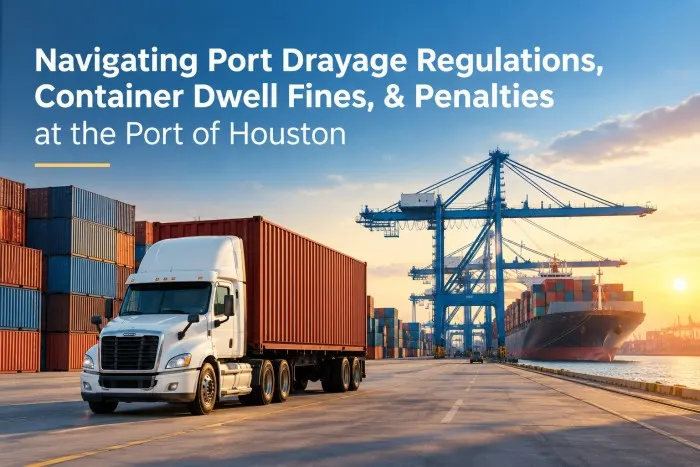
As one of the fastest-growing trade gateways in the United States, the Port of Houston—encompassing the Barbours Cut and Bayport container terminals—handles massive cargo volumes. However, import logistics here demand strict adherence to operating protocols, motor carrier compliance, and fast-evolving financial penalties.
To protect supply chain margins, Beneficial Cargo Owners (BCOs), freight forwarders, and drayage motor carriers must master local drayage guidelines, container dwell penalties, and strict terminal fee structures.
1. Port Houston Drayage Operations & Gate Protocols
Moving cargo safely and efficiently in and out of Houston’s terminals requires absolute coordination between drayage drivers and terminal operating systems.
- Gate Windows & Operating Hours: Standard gate hours for Barbours Cut and Bayport run from 6:00 AM to 7:00 PM (Monday through Friday), with ingates closing sharply at 6:00 PM. Weekend closures and strict holiday schedules require synchronizing vessel availability with trucker dispatch.
- Appointment Systems: Port Houston utilizes a mandatory gate reservation system via its terminal operating system. Motor carriers must secure correct time slots prior to dispatch. Missing a window results in rejected turnaways, wasted driver hours, and potential appointment penalties.
- Catchment Area: A standard drayage turn reliably serves the greater Houston industrial complex, the eastern I-10 corridor toward Beaumont, and central Texas inland hubs like Austin and San Antonio.
Port Houston Terminal Operational Summary
| Operational Parameter | Barbours Cut & Bayport Terminals |
|---|---|
| Standard Gate Hours | Monday – Friday, 6:00 AM – 7:00 PM (Ingates close at 6:00 PM) |
| Reservation System | Mandatory Terminal Operating System (TOS) appointment slots |
| Average Turn Times | 60 to 90 minutes (subject to vessel-working surges) |
| Primary Portal System | Port Houston Lynx Portal System for fee processing and terminal access |
2. Container Dwell Fines, Demurrage, and Escalating Penalties
Port Houston enforces aggressive economic measures to discourage container yard gridlock. Cargo left sitting on the docks past its allotted free time triggers heavy compounding fines.
Demurrage vs. Port Dwell Fees
- Standard Demurrage: Assessed directly by ocean carriers for occupying terminal space after standard free time expires (typically 5 to 7 days, depending on service contracts).
- Sustained Import Dwell Fees: Port Houston applies an administrative port-level fee on loaded import containers remaining on terminal grounds. Under current guidelines outlined by the Port Houston Official Tariff Schedules, a baseline Sustained Import Dwell Fee of roughly $46.44 per unit, per day is assessed beginning on the eighth day after free time expires. This fee stacks on top of standard ocean carrier demurrage.
Explore More- Navigating Port Drayage Regulations & Container Dwell Fees at the Port of Boston
Excessive Import Dwell Fines and Tiered Penalties
During periods of severe congestion or for specialized equipment (such as reefers), Port Houston can trigger escalated Excessive Import Dwell Fees. These penalties grow progressively harsher the longer a container lingers:
| Dwell Window (Post Free Time Expiration) | Estimated Excessive Import Dwell Fine |
|---|---|
| Days 1 to 3 | Up to $51.60 per unit / day |
| Days 4 to 7 | Up to $77.40 per unit / day |
| Days 8 to 13 | Up to $103.20 per unit / day |
| 14+ Days | Up to $154.80 per unit / day |
Operational Warning & Holds: Containers flagged for unpaid terminal dwell fines or exam fees (such as USCG, USDA, or VACIS exam penalties) are placed on immediate hard hold. Terminals will outright deny physical gate pickup until all fines are reconciled via Port Houston’s online Lynx Portal System.

3. Regulatory Compliance: Federal Maritime Commission (FMC) Safeguards
Disputing unjustified or ambiguous penalty invoices has become more transparent due to federal oversight rules governed under the Electronic Code of Federal Regulations 46 CFR Part 541 (Demurrage and Detention):
- Mandatory Itemized Billing: Invoices carrying demurrage or detention penalties must explicitly list 13 required data points (including container numbers, exact points of accrual, and clear free-time markers).
- Strict Timelines: Billing parties must issue penalty or demurrage invoices within 30 days of charges being incurred, and BCOs possess a protected 30-day window to contest improper charges.
- The $75 Threshold: Minor accessorial fines or penalty charges below $75 cannot legally be billed under federal compliance thresholds.
Explore More- Massachusetts Oversized Load Permit Regulations
4. Best Practices to Mitigate Penalties and Fees
To avoid sudden financial hits from accumulating container fines at Barbours Cut or Bayport, logistics teams should implement these preventative measures:
- Monitor Free-Time Daily: Use port tools and terminal dashboards to track container discharge times actively. Do not wait for the carrier notice to trigger a response.
- Pre-Clear Customs & Documentation: Ensure that customs entries, freight releases, and terminal fees are entirely cleared before dispatching a driver. Customs holds combined with ticking dwell tiers lead to rapid financial losses.
- Utilize the Lynx Portal Efficiently: Make sure your back-office logistics team maintains an active account on Port Houston’s Lynx system to process credit card payments or guarantees instantly, preventing gate lockouts.
- Diversify Drayage Capacity: Establish operational relationships with multiple motor carriers registered within the port portal to ensure flexible surge capacity when tight import clearance windows demand immediate movement.