
Maine Child Car Seat Laws: What Parents Need to Know
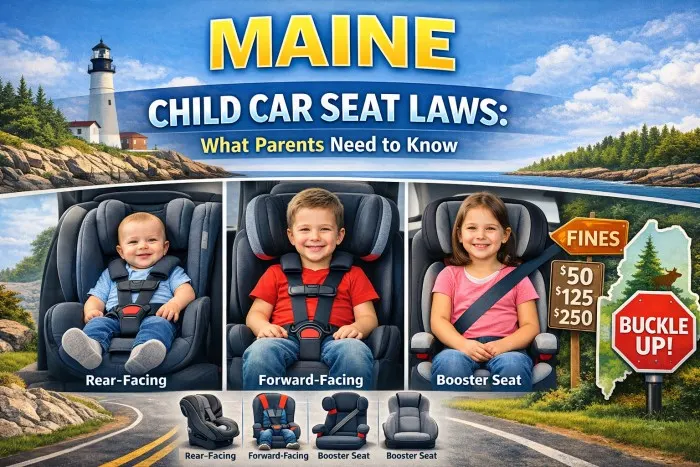

Ensuring the safety of children while traveling in vehicles is a priority across the United States. In the state of Maine, strict child passenger safety laws require children to use appropriate car seats, booster seats, or seat belts based on their age, height, and weight. These laws are designed to reduce injuries and fatalities during car accidents and ensure that children are properly protected on the road.
Understanding Maine’s child car seat laws helps parents and caregivers comply with legal requirements and, more importantly, keep young passengers safe.
Why Car Seat Laws Are Important
Car crashes remain one of the leading causes of injury and death for children. Properly installed and correctly used car seats significantly reduce the risk of serious injury. Child restraint systems distribute crash forces over stronger parts of the body and prevent children from being thrown around inside the vehicle.
Because children’s bodies are still developing, standard seat belts are not always sufficient for younger passengers. That’s why Maine law requires different types of restraints depending on the child’s size and developmental stage.
Explore More- New Hampshire Child Car Seat Rules: What Every Parent Needs to Know
Rear-Facing Car Seat Requirements
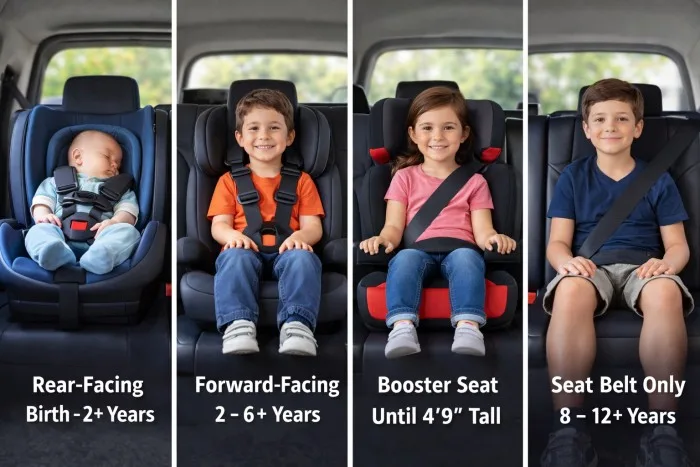
In Maine, children must ride in a rear-facing car seat until they reach two years of age or exceed the manufacturer’s weight or height limits for that seat. Rear-facing seats provide essential support for a baby’s head, neck, and spine during sudden stops or collisions.
Rear-facing seats are typically used for:
- Newborns
- Infants
- Toddlers under two years old
Safety experts also recommend keeping children rear-facing for as long as possible within the seat’s limits, as this position offers the greatest protection during a crash.
Forward-Facing Car Seats with Harness
Once a child outgrows a rear-facing seat, they should transition to a forward-facing car seat equipped with an internal harness system. Maine law requires children who are two years or older but weigh less than 55 pounds to be secured in a child restraint system with an internal harness.
A forward-facing car seat keeps the child securely in place using a five-point harness that distributes crash forces across the strongest parts of the body.
Parents should ensure that:
- The harness is snug
- The seat is installed properly
- The seat meets federal safety standards
Booster Seat Requirements
Booster seats are required for children who have outgrown forward-facing car seats but are still too small for a standard seat belt. In Maine, a child must ride in a booster seat if they:
- Weigh less than 80 pounds
- Are under 8 years old
- Are shorter than 4 feet 9 inches (57 inches)
Booster seats lift the child so that the vehicle’s seat belt fits correctly across the shoulder and upper thighs instead of the neck or stomach. Proper seat belt positioning is critical to prevent serious injuries during an accident.
Explore More- Safe Travels: A Guide to Child Seat Rules in New York City
Seat Belt Requirements for Older Children
Children who are older than 8 years or taller than 4 feet 9 inches can transition from a booster seat to a regular seat belt, provided the belt fits correctly. However, Maine law still requires that all passengers under 18 years old wear a seat belt while riding in a vehicle.
A properly fitting seat belt should:
- Rest across the upper thighs (not the stomach)
- Cross the shoulder and chest (not the neck or face)
If the belt does not fit properly, the child should continue using a booster seat for additional safety.
Back Seat Requirement
Maine also has rules about where children should sit in a vehicle. The law states that children under 12 years old and weighing less than 100 pounds should ride in the back seat whenever possible, especially if the vehicle has a passenger-side airbag.
Airbags are designed for adult bodies and can cause serious injury to children if deployed in the front seat during a crash. The back seat is generally considered the safest place for young passengers.
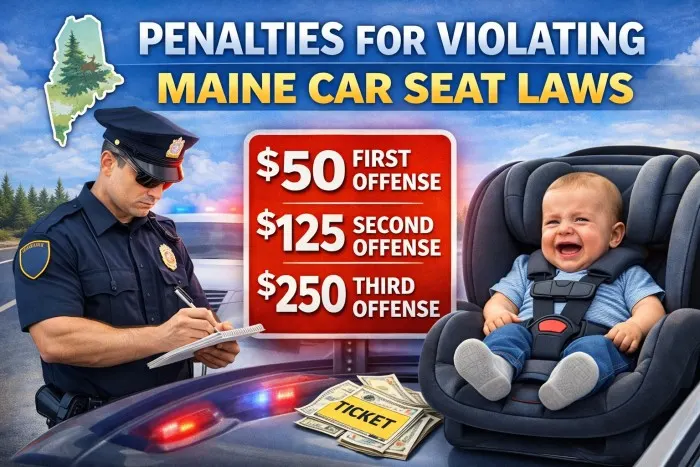
Penalties for Violating Maine Car Seat Laws
Drivers who fail to properly secure a child in the appropriate restraint system may face fines. The penalties generally include:
- $50 for the first offense
- $125 for the second offense
- $250 for third and subsequent offenses
These fines apply when a child is not secured in the correct car seat, booster seat, or seat belt according to Maine law.
Safety Tips for Parents and Caregivers
Following the law is important, but proper usage of car seats is just as critical. Here are a few safety tips:
- Always follow the manufacturer’s installation instructions.
- Make sure the car seat is tightly secured and does not move more than one inch.
- Keep children in each stage of restraint as long as possible before moving to the next stage.
- Regularly check that the harness and seat belts fit correctly.
- Use certified child passenger safety technicians if you need help installing a car seat.
Conclusion
Maine’s child car seat laws are designed to protect young passengers and reduce the risk of injury during accidents. By following the requirements for rear-facing seats, forward-facing harness seats, booster seats, and seat belts, parents can ensure their children travel safely and legally.
Understanding and following these rules is one of the simplest and most effective ways to protect children on the road. Proper car seat use, combined with responsible driving, helps create a safer environment for families across Maine.