
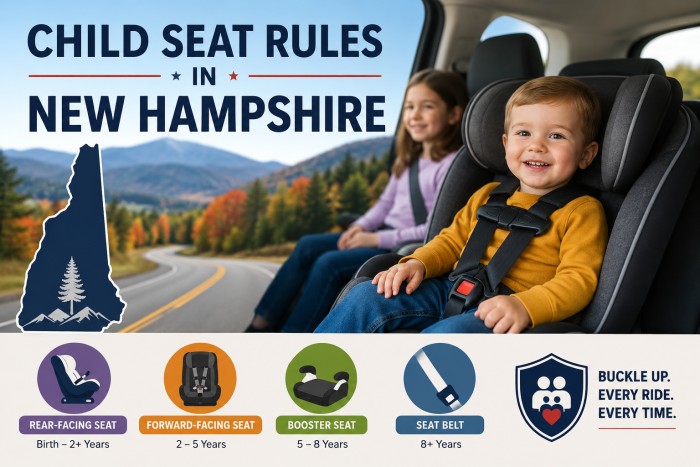
Keeping children safe during travel is one of the most important responsibilities for parents and caregivers. Proper use of child safety seats significantly reduces the risk of serious injury during accidents, which is why every state in the United States has specific laws regarding child passenger safety. Understanding the child seat rules in New Hampshire helps families stay compliant with the law while ensuring maximum protection for young passengers.
This guide explains New Hampshire’s child restraint laws, seat recommendations by age and size, safety tips, common mistakes, and important information every parent should know before hitting the road.
Why Child Seat Laws Matter
Motor vehicle accidents remain one of the leading causes of injury among children. Child restraint systems are designed to protect a child’s head, neck, spine, and internal organs during sudden stops or collisions. Since children’s bodies are still developing, adult seat belts alone cannot provide adequate protection.
Correctly installed car seats and booster seats reduce the risk of fatal injuries and help distribute crash forces more safely across stronger parts of a child’s body.
Explore More- Safe Travels: A Guide to Child Seat Rules in New York City
Understanding New Hampshire Child Seat Laws
New Hampshire law requires children under the age of 18 to wear seat belts or appropriate child restraints while traveling in a vehicle. The law specifically outlines requirements for younger children based on age and size.
Basic Legal Requirements
- Children under 7 years old and shorter than 57 inches must use an approved child restraint system.
- Children who exceed either the height or age requirement may transition to regular seat belts if they fit properly.
- All passengers under 18 years old must wear seat belts regardless of seating position.
The law focuses on minimum legal standards, but safety experts often recommend keeping children in age-appropriate restraints longer whenever possible.
Rear-Facing Car Seat Guidelines
Rear-facing seats provide the highest level of protection for infants and toddlers because they support the head, neck, and spine during collisions.
Recommended Age Range
- Newborns through toddlers
- Typically until at least age 2 or until reaching the seat’s height or weight limit
Benefits of Rear-Facing Seats
- Better neck and spinal protection
- Reduced crash impact on delicate body structures
- Safer positioning during frontal collisions
Parents should always follow the manufacturer’s weight and height limits instead of transitioning too early.
Explore More- Buckle Up for Safety: A Guide to Child Seat Rules in Spain
Forward-Facing Car Seat Rules
Once children outgrow rear-facing limits, they can move into forward-facing seats equipped with a harness system.
Recommended Use
- Usually appropriate for children aged 2 to 5 years
- Continue using the harness as long as possible within seat limits
A five-point harness helps distribute impact forces evenly across the shoulders, chest, and hips.
Booster Seat Recommendations
Booster seats help position adult seat belts properly across a child’s body. Without a booster seat, seat belts may rest dangerously across the neck or stomach.
Children Typically Need Booster Seats Until:
- Seat belts fit correctly without assistance
- Usually between ages 8 and 12
Proper Seat Belt Fit
- Lap belt rests across the upper thighs, not the stomach
- Shoulder belt crosses the chest and shoulder, not the neck
Seat Belt Safety for Older Children
Even after transitioning out of booster seats, children should continue riding in the back seat whenever possible. The back seat offers additional protection, especially from front airbags, which can cause injuries to smaller passengers.
Safe Seat Belt Habits
- Never place the shoulder belt behind the back
- Avoid sharing seat belts between passengers
- Ensure belts remain snug and untwisted
Common Car Seat Mistakes Parents Make
Many car seats are installed incorrectly, reducing their effectiveness during accidents. Some of the most common mistakes include:
Loose Installation: A car seat should not move more than one inch side-to-side or front-to-back.
Incorrect Harness Position: Harness straps should fit snugly and remain at the correct shoulder level based on seat orientation.
Transitioning Too Early: Moving children to the next seat stage before reaching size limits can reduce protection.
Bulky Winter Clothing: Heavy jackets create gaps between the harness and the child’s body, making restraints less effective.
Importance of Proper Installation
Even the best car seat cannot provide maximum protection if installed incorrectly. Many hospitals, police departments, and certified child passenger safety technicians offer free car seat inspection services.
Parents should:
- Read both the vehicle owner’s manual and car seat instructions
- Check expiration dates on car seats
- Replace seats involved in moderate or severe accidents
Taxi, Rideshare, and Travel Considerations
Travel situations often create confusion regarding child restraint rules. Although some transportation services may have exemptions, using a proper child seat remains the safest option.
Families traveling in rental cars, taxis, or rideshare vehicles should plan ahead by bringing portable child restraints suitable for the child’s age and size.
Weather Challenges in New Hampshire
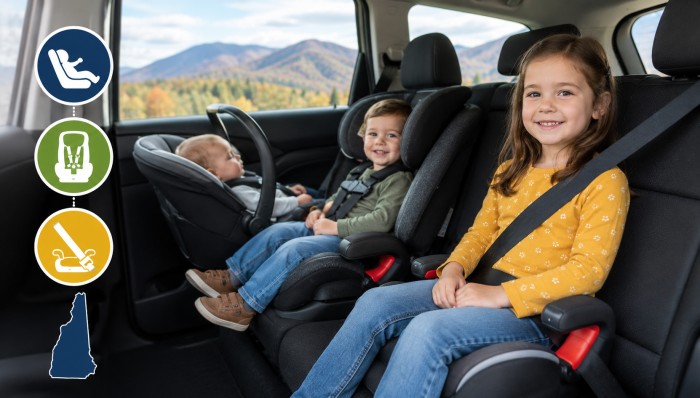
New Hampshire’s cold winters create unique safety concerns for child passengers. Snow suits and thick winter coats can interfere with harness effectiveness.
Safer Winter Travel Tips
- Dress children in thin, warm layers
- Tighten harnesses properly
- Place blankets over the secured harness instead of underneath it
These simple adjustments improve safety without sacrificing warmth.
Explore More- Child Seat Rules in Japan: A Comprehensive Guide to Ensuring Child Safety
Penalties for Violating Child Seat Laws
Failure to follow child passenger safety laws may result in fines and penalties. More importantly, improper restraints can place children at significant risk during accidents.
In New Hampshire, violating child passenger safety laws results in a fine of $50 for a first offense and $100 for a second offense. Law enforcement officers may issue citations if children are not properly secured according to state requirements.
Choosing the Right Child Seat
Selecting the correct seat depends on several factors:
- Child’s age
- Height and weight
- Vehicle compatibility
- Ease of installation
- Safety certifications
Parents should prioritize seats that meet federal safety standards and fit correctly in their vehicle.
Final Thoughts
Understanding and following the child seat rules in New Hampshire is essential for protecting young passengers during every trip. While state laws establish minimum requirements, safety experts consistently recommend using age-appropriate restraints for as long as possible.
Proper car seat use, correct installation, and safe driving habits work together to reduce injury risks and create safer travel experiences for children. Taking the time to choose the right restraint system and ensuring proper fit can make a life-saving difference in the event of an accident.