
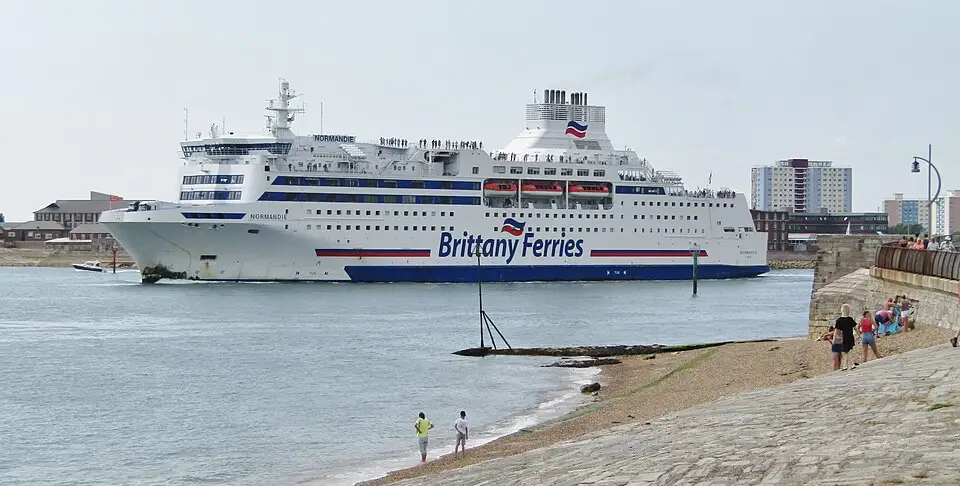
Brittany Ferries has announced significant operational changes, including the sale of two vessels and the closure of selected ferry routes, as it responds to mounting financial pressures. The ferry operator says increasing taxes, lingering pandemic-related debt, higher operating expenses, and changing market conditions have made it necessary to reorganize its network and improve efficiency.
Poole–Cherbourg Route to Close
The company confirmed that its long-running Poole–Cherbourg service will end from November 2026. The route has been operated by Barfleur, a ferry built in 1992, which will now be sold as part of the company’s restructuring plan.
To maintain connections with northern France, Brittany Ferries will introduce a daily Portsmouth–Cherbourg service, offering travelers an alternative option.
Cotentin Vessel to Be Sold
Another vessel leaving the fleet is Cotentin, built in 2007. Although the ship currently operates between Cherbourg and Rosslare, the route itself will continue. Brittany Ferries plans to assign other vessels from its fleet to maintain the service after Cotentin is sold.
Portsmouth–Le Havre Service Faces Closure
Brittany Ferries also plans to discontinue its Portsmouth–Le Havre route from October 2026. According to the company, the decision is driven by what it describes as unfair competition on eastern Channel routes. Brittany Ferries claims subsidized operations on the Dieppe–Newhaven route, served by DFDS Seaways, have made it increasingly difficult to keep the Portsmouth–Le Havre service financially sustainable.
The operator said it had continued operating the route while legal challenges regarding the subsidies were being considered by European authorities.
Fleet to Operate More Efficiently
Beginning November 1, Brittany Ferries will introduce a revised sailing schedule designed to make better use of its fleet.
Under the new arrangements:
- Brittany Ferries Islander will operate a triangular route connecting Portsmouth, Guernsey, and Cherbourg.
- Voyager, the company’s high-speed craft, will continue serving Poole and Guernsey, while also offering onward travel to St Malo.
The company says the revised timetable is part of a broader initiative to consolidate services where appropriate and improve operational efficiency.
No UK Job Losses Planned
Despite the operational changes, Brittany Ferries has reassured employees that no UK staff redundancies are planned. Speaking to BBC Radio Solent, a company spokesperson described the situation as “a perfect storm of increased costs,” but emphasized that the restructuring is intended to secure the company’s long-term future rather than reduce its workforce.
Flexible Options for Affected Passengers
Customers who have already booked travel on routes affected by the changes will not lose their bookings. Passengers will be able to choose between:
- A full refund, or
- An alternative Brittany Ferries sailing where available.
The company says it will contact affected travelers directly to explain their available options.
Rising Costs Continue to Challenge the Business
Brittany Ferries says the ferry industry continues to feel the financial impact of the COVID-19 pandemic. While the company has already repaid half of the government-backed loan received during the health crisis, a significant portion remains outstanding.
At the same time, Brittany Ferries faces increasing costs from the European Union’s Emissions Trading System (ETS). The operator estimates that ETS charges alone will cost the company approximately €27 million in 2026. The company argues that these costs do not adequately recognize the substantial investment it has already made in reducing emissions.
Investment in a Greener Fleet Continues
Despite the financial pressures, Brittany Ferries has continued investing heavily in fleet modernization. Between 2019 and 2025, the company introduced five new vessels, representing the largest fleet renewal program in its history.
Among the newest additions are two LNG-electric hybrid ferries:
- Saint-Malo, launched in February 2025
- Guillaume de Normandie, launched in April 2025
These ships are designed to reduce fuel consumption and lower carbon emissions while improving operational efficiency.
CEO: Changes Are Necessary for the Future
Chief Executive Christophe Mathieu said Brittany Ferries has repeatedly adapted to major industry challenges, including the COVID-19 pandemic and the effects of Brexit. He explained that while the company remains committed to offering affordable holidays to France and Spain, it must also take practical steps to ensure its long-term sustainability. Mathieu added that Brittany Ferries has informed its port partners about the restructuring and will work closely with everyone affected as the company moves forward with its future plans.
Looking Ahead
Although some long-established routes will disappear and two vessels will leave the fleet, Brittany Ferries believes the restructuring will create a more efficient operating model capable of meeting future challenges. By modernizing its fleet, optimizing schedules, and focusing on sustainable operations, the company hopes to remain a leading ferry operator connecting the UK, France, Ireland, and Spain for years to come.
Image Credits- Britanny Ferries
