

Transportation is changing quickly, but one truth remains steady: every moving asset creates a public impression. Vans, trucks, trailers, service vehicles, delivery fleets, mobile units, and specialty transport assets all pass through streets, job sites, neighborhoods, highways, campuses, warehouses, and event locations. Each one can either move silently through the background or become a visible part of a company’s brand presence.
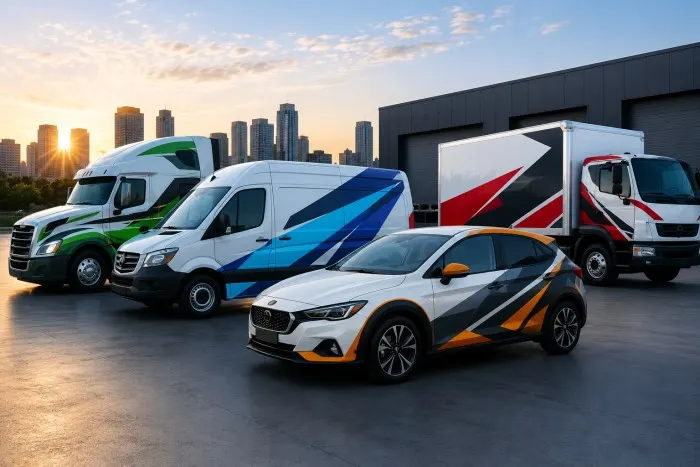
For businesses with active fleets, graphics are not just decoration. They are part of how the company communicates in the field. A well-branded fleet can make an organization easier to recognize, help customers identify service teams, and create repeated exposure across daily routes. When design, materials, installation, and consistency are handled well, vehicles become moving proof of professionalism. They carry the brand into places where digital ads may never reach.
Why Fleet Visibility Matters in a Moving Economy
Modern businesses depend on movement. Products move from warehouses to customers. Service teams move between appointments. Medical, utility, construction, logistics, retail, and industrial crews move through communities every day. This constant motion creates a powerful branding opportunity because vehicles are already operating in public spaces. The question is whether the company uses that visibility with intention.
A clean fleet identity helps a business appear organized and established. Customers often notice a vehicle before they meet the team behind it. If the vehicle is clearly marked, well designed, and consistent with the company’s other brand materials, it can reduce uncertainty and build trust. This is especially important for service providers entering homes, commercial properties, job sites, healthcare locations, or public spaces where identification matters.
A Fleet Is a Repeating Brand Signal
One wrapped vehicle can create impressions throughout the day, but a coordinated fleet creates repetition. When multiple vehicles carry the same visual system, people begin to connect the colors, logo, service category, and message with the company. That recognition builds quietly over time. It does not require the audience to stop and study the vehicle. The repeated presence does the work.
This is why consistency matters. A fleet should not look like a collection of unrelated designs. Logos, color use, typography, placement, and message hierarchy should be planned across vehicle types. A box truck, cargo van, service pickup, trailer, and specialty unit may have different surfaces, but they should still feel like part of the same brand family.
Transport Innovation and the Need for Clear Identity
As transportation evolves, brand identity will remain important across old and new forms of movement. Logistics networks are expanding beyond conventional roads and vehicles, with new ideas emerging around automated systems, aerial delivery, and smarter routing. Even as technology changes the way goods and services move, companies still need visual clarity at every customer-facing touchpoint.
The discussion around the future of drone transportation shows how mobility is becoming more advanced, connected, and distributed. Fleet graphics belong within that broader story because visibility is not limited to traditional advertising. Any transport asset that interacts with the public can become part of a brand’s recognition system. As mobility networks become more complex, clear identity becomes even more valuable.
Readable Design Works Faster Than Overloaded Design
Fleet graphics are usually seen in motion. A person may notice a vehicle while driving, walking, waiting at a light, entering a parking lot, or passing a job site. That means the design must communicate quickly. A strong fleet graphic system often depends on restraint: clear logo placement, readable text, strong contrast, and a simple message that can be understood at a glance.
Too much information can weaken the result. Long service lists, crowded visuals, small text, and confusing layouts are difficult to process on the road. The best designs respect the viewing environment. They make the company recognizable first, then support secondary information without creating visual noise.
Making Every Route Part of the Brand
When companies want their vans, trucks, trailers, service vehicles, or mobile units to create a consistent professional impression, the visual system must be durable, readable, and scalable across the full fleet. Professionally produced fleet graphics help turn everyday transportation into a moving brand platform that supports recognition, trust, and visibility wherever the vehicles operate.
Industry 4.0 and the Visible Side of Operations
Industrial operations are becoming more digital, automated, and data-driven. Companies are using connected systems to manage routing, production, scheduling, maintenance, inventory, and customer communication. Yet the public rarely sees those internal systems. What people often see first is the vehicle arriving at a site, parked outside a facility, or moving through the city.
That is why the visual side of operations should not be ignored. Coverage of AI-driven Industry 4.0 highlights how automation and intelligent systems are reshaping industrial performance. Fleet graphics add the human-facing layer to that transformation. The systems may improve how a company operates, but the vehicles show the public how prepared and professional the company appears.
The Exterior Should Match the Operation Behind It
A company may have excellent scheduling software, trained teams, strong logistics, and reliable service processes, but a neglected or inconsistent fleet can send the wrong message. The exterior should reflect the discipline behind the business. Clean graphics, consistent branding, and durable finishes suggest that the company manages details carefully.
This is especially important for companies that operate in competitive service markets. Customers may compare providers based on trust before they ever compare technical details. A professional fleet can support that trust by making the company look established, easy to identify, and ready to work.
Brand Section: Craftsmen Industries
Craftsmen Industries is associated with large format graphics, custom fabrication, fleet branding, vehicle wraps, mobile environments, trailers, and specialized industrial builds. In the fleet graphics category, the brand’s relevance comes from the need to combine design clarity with production quality. A fleet graphic program must look strong in concept and perform well on real vehicles in real operating conditions.
For businesses managing multiple vehicles, the finished graphics must support consistency across different shapes, sizes, and surface conditions. The work requires careful planning, accurate production, durable materials, and skilled installation. Craftsmen Industries operates in a category where brand presentation and field performance must work together, because the final result is seen every day on the road.
Building Fleet Graphics for Long-Term Use
A fleet graphic system should be planned for more than the first installation. Vehicles face sunlight, rain, road debris, washing, temperature shifts, and daily wear. If materials fade, peel, bubble, or fail around seams and curves, the brand loses sharpness. Durability protects both appearance and investment.
Long-term planning also helps as fleets grow. A company may add vehicles over several years, replace older units, or update service categories. Templates, placement rules, approved colors, and scalable design standards help future vehicles match the original identity. Without that structure, the fleet can slowly drift into inconsistency.
Good Graphics Make Field Teams Easier to Trust
Fleet graphics also support the people using the vehicles. Drivers, technicians, installers, delivery teams, and field staff arrive with a stronger sense of legitimacy when the vehicle clearly represents the company. Customers know who has arrived. Other teams can identify the vehicle on site. The brand feels present in the physical world, not only on a website or invoice.
That practical trust is one of the strongest reasons to invest in fleet branding. It supports visibility, but it also supports confidence. In daily operations, that combination can make every route, stop, and parked vehicle part of the company’s public reputation.
What can we infer
Fleet graphics give companies a way to turn movement into recognition. They help vehicles communicate professionalism, support customer trust, and create repeated brand exposure across the places where business actually happens. In a world of smarter logistics, connected operations, and changing transportation networks, the visible identity of a fleet still matters.
When designed with clarity, installed with care, and planned for long-term consistency, fleet graphics become more than vehicle decoration. They become a practical layer of brand infrastructure, moving through markets every day and helping the company arrive with a stronger, clearer presence.