
Why Light Transport Aircraft Matter in High-End Air Warfare
In an era dominated by fifth-generation fighters, long-range precision munitions, and sophisticated anti-access/area-denial (A2/AD) networks, the humble light or tactical transport aircraft often appears an anachronism. Stealth bombers and hypersonic weapons capture headlines; yet history and contemporary operations repeatedly demonstrate that these rugged, short-field workhorses remain indispensable force multipliers. They enable the sustainment of distributed forces, the insertion of special operations, rapid resupply under fire, and even the transformation of logistics platforms into strike assets. In high-end conflict—peer or near-peer warfare against adversaries capable of holding large fixed bases at risk—their ability to operate from austere locations, absorb attrition more economically, and free high-end platforms for decisive missions becomes a strategic necessity rather than a convenience.
The Core Advantages in Contested Environments
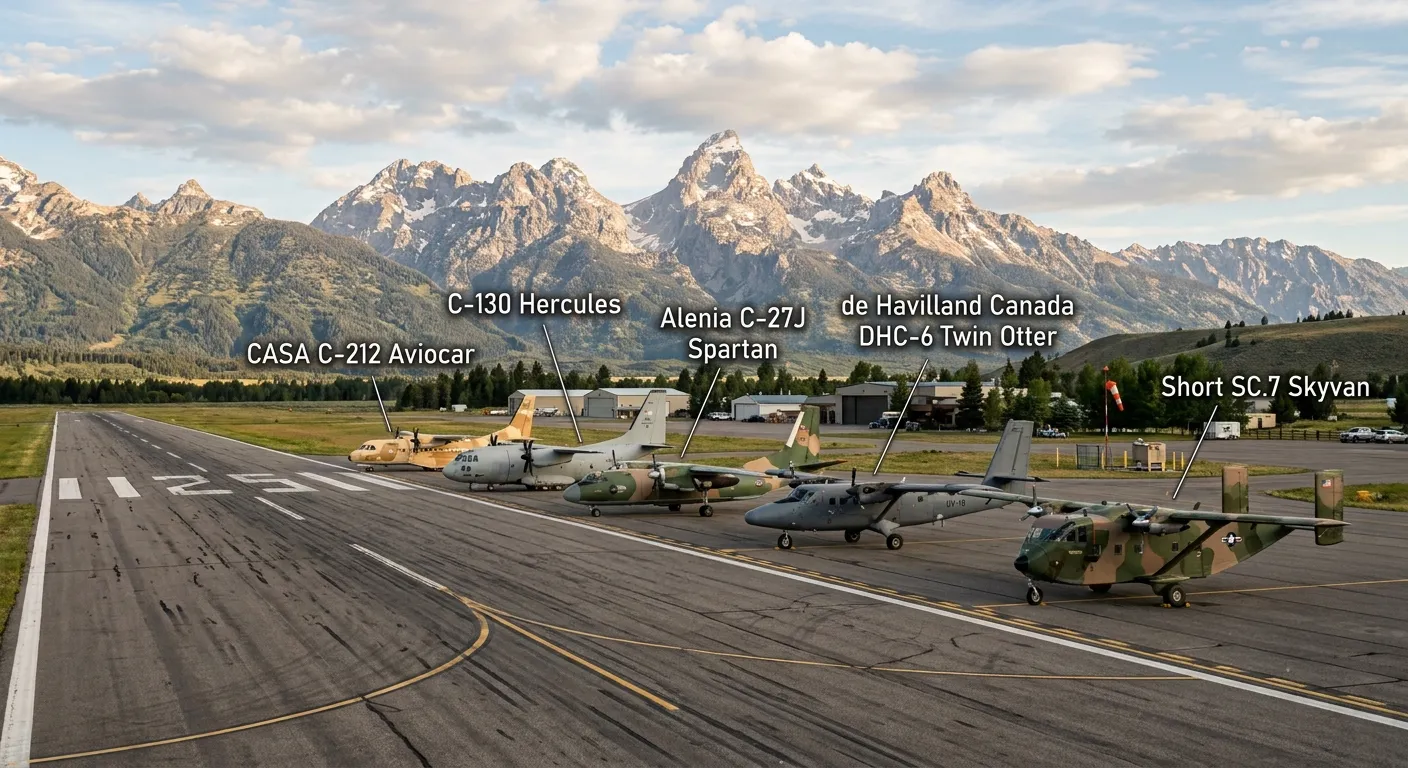
High-end air warfare is defined by contested airspace, long-range sensors and missiles that threaten concentrated logistics hubs, and the imperative for Agile Combat Employment (ACE) or distributed operations. Large strategic airlifters such as the C-17 or C-5 excel at inter-theater movement but require substantial runways and are too valuable to risk routinely in the forward edge of battle. Light and medium tactical transports—exemplified by the Lockheed Martin C-130 Hercules family, C-27J Spartan, Airbus C-295, Antonov An-26/An-28 series, and even smaller types like the Twin Otter—thrive precisely where infrastructure is limited or under threat.
Their short take-off and landing (STOL) performance allows operations from unprepared strips, dirt roads, or secondary fields that enemy long-range fires cannot economically suppress. This disperses risk and complicates the adversary’s targeting problem. As Maj. Gen. Gerald Donohue of Air Mobility Command has observed, “Tactical and strategic airlift are foundational to how we project power. Modernizing these capabilities will enable us to respond to crises quickly, sustain joint forces and operate in contested environments.”
These aircraft also deliver unmatched versatility at lower operating cost. A single airframe can airdrop troops or pallets, conduct medical evacuation, perform low-level infiltration, serve as an aerial tanker for helicopters, or be reconfigured as a gunship or missile launcher. Their relative affordability permits greater numbers and higher sortie rates, reducing the wear on scarce fifth-generation fighters that would otherwise be diverted to secondary logistics or close support roles.
Historical Proof: Small Transports, Outsized Impact
The Vietnam War provides classic illustration. At the 1968 siege of Khe Sanh, C-130s executed over 1,100 aerial resupply missions, delivering roughly 12,400 tons of critical supplies that kept the Marine garrison viable for 77 days against intense North Vietnamese pressure. Later, during the 1972 Easter Offensive battle for An Loc, C-130 crews flew low-altitude drops under heavy anti-aircraft fire, sustaining isolated South Vietnamese forces. One observer noted that if the C-130s had been grounded, the American effort in Vietnam would have collapsed; the aircraft performed the airlifts and airdrops for which it was designed “plus a few that were made up on the spot.” [ref: Militarytimes]
Even lighter types mattered. The de Havilland Canada C-7 Caribou and Australian equivalents operated into roughly 188 of Vietnam’s 300 primitive airstrips that larger aircraft could not use, serving as the lifeline to Special Forces outposts and remote positions. Project CHECO reports described them as essential for delivering ammunition, fuel, personnel, and even live animals to units lacking refrigeration.
World War II offered earlier lessons. German Ju-52 transports sustained the Demyansk pocket for months in 1942, proving that airlift could keep encircled forces fighting. Allied C-47s executed the massive airborne assaults at Normandy and elsewhere, while smaller liaison and utility aircraft performed critical resupply and casualty evacuation in fluid conditions.
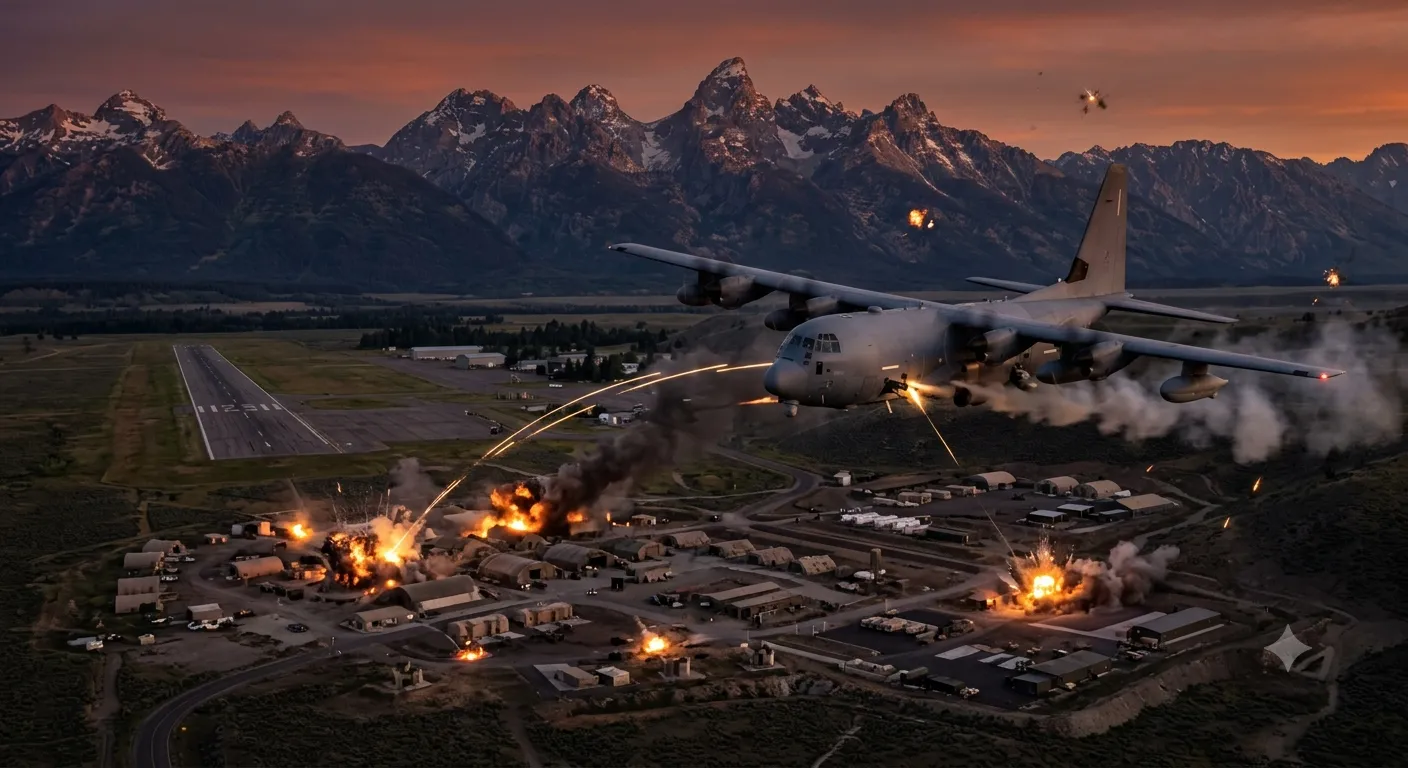
In more recent decades, the C-130’s adaptability produced the AC-130 gunship series, which delivered devastating precision fire support from Vietnam through the Global War on Terror. Special operations variants (MC-130) enabled infiltration and exfiltration deep into denied areas. The platform’s ruggedness allowed it to land under fire, offload rapidly, and depart—capabilities no larger strategic airlifter can match at the same scale.
Modern Adaptations: From Logistics to Lethality
Contemporary high-end concepts further elevate these aircraft. The U.S. Air Force’s Rapid Dragon program converts C-130s (and C-17s) into standoff missile launchers by airdropping pallets of cruise missiles such as the JASSM. A C-130J can deploy six such weapons; the concept has been demonstrated live-fire and offers a low-cost way to mass precision fires without risking high-value bombers in every engagement. Combined with C-130-delivered HIMARS rocket systems for “rapid infiltration,” these platforms create mobile, survivable long-range strike options that complicate enemy defenses. [reference: Lockheed Martin ]
In the Indo-Pacific context, where distances are vast and fixed bases vulnerable to Chinese missile salvos, the C-130’s ability to operate from dispersed island airstrips or even, experimentally, carrier decks (as demonstrated in 1963) expands options for sustainment and contingency operations. Gen. Mike Minihan, former Air Mobility Command commander, pushed the community to innovate, noting the C-130’s traditional role flying the “last tactical mile” now also delivers the “first strategic mile” in great-power competition through extended-range and rapid-deployment tactics.
Ukraine’s ongoing conflict supplies current evidence. Aging Antonov An-26 and An-28 light transports have been pressed into diverse roles: logistics under threat, and even improvised counter-drone platforms. One An-28 equipped with a side-firing minigun has claimed scores of Shahed-type drones, while others have tested launching interceptor drones. These low-cost, high-endurance platforms free more advanced fighters for higher-threat missions and demonstrate that even 1970s- and 1980s-era designs retain relevance when employed creatively against modern threats.
Expert Consensus and the Road Ahead
Military leaders consistently underline the point. Lockheed Martin’s Rich Johnston has stated there is “no aircraft in aviation history—either fielded or under development—that can match the flexibility, versatility and relevance of the Lockheed Martin C-130 Hercules.” Retired Gen. Carlton Everhart II described it as the epitome of the last tactical mile: reliable, able to deliver hope and capability into austere fields. Capt. Christopher Gullo, a C-130 weapons officer, stresses that modernized airlift provides “the ability to operate against capable adversaries and still accomplish our mission.”
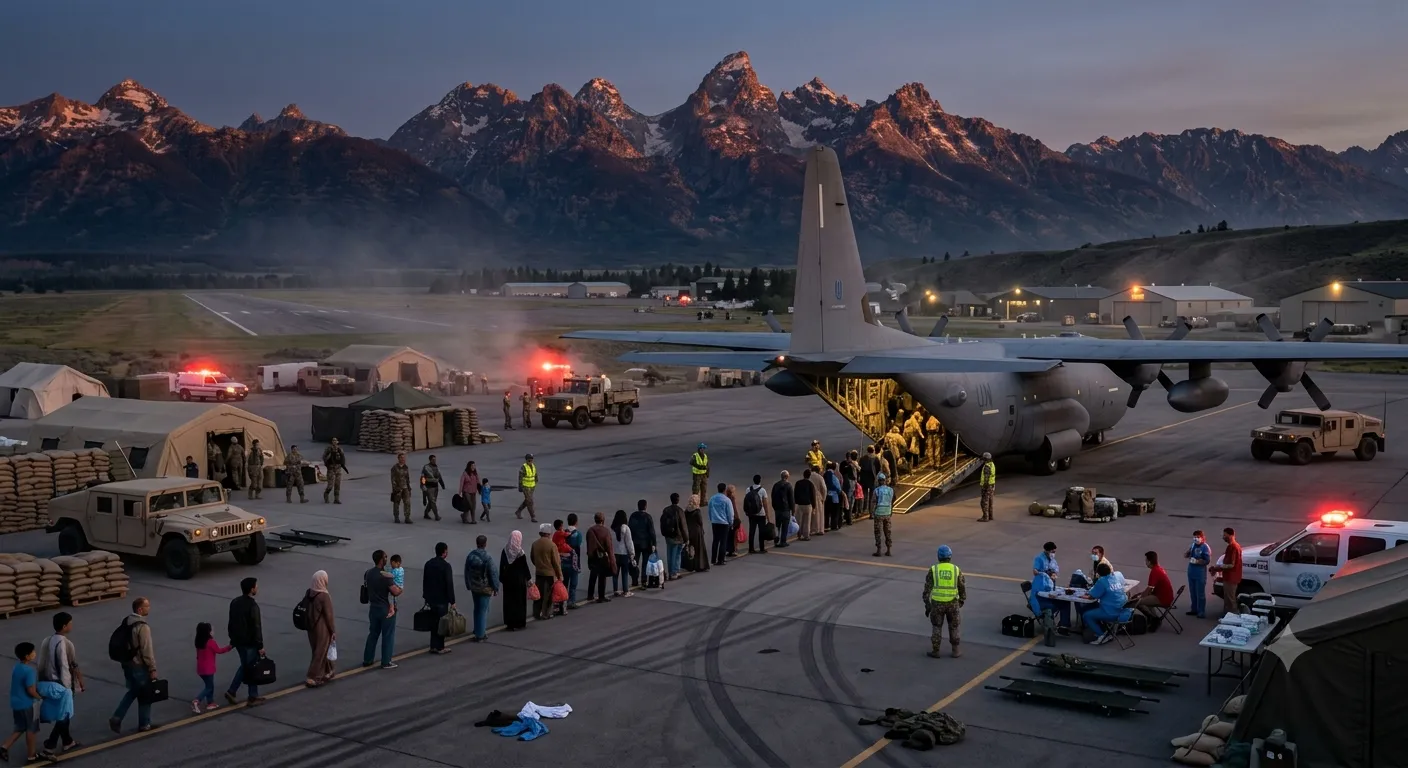
In high-end warfare, the loss of a light transport is regrettable but recoverable; the loss of a stealth fighter or heavy strategic airlifter is far more consequential. Light transports enable the joint force to disperse, sustain, and regenerate combat power while high-end assets focus on seizing and maintaining air superiority or conducting decisive strikes. They bridge the gap between strategic deployment and tactical employment, turn logistics into an offensive tool, and ensure that isolated units do not become isolated catastrophes.
As peer competition intensifies and A2/AD systems proliferate, air forces that neglect their tactical airlift fleets risk discovering—too late—that the ability to move the last pallet of ammunition or extract a special operations team under fire can decide the outcome of campaigns. Light transport aircraft do not win air superiority alone, but without them, the forces that do win it cannot remain in the fight. In the unforgiving arithmetic of high-end air warfare, that difference is decisive.